
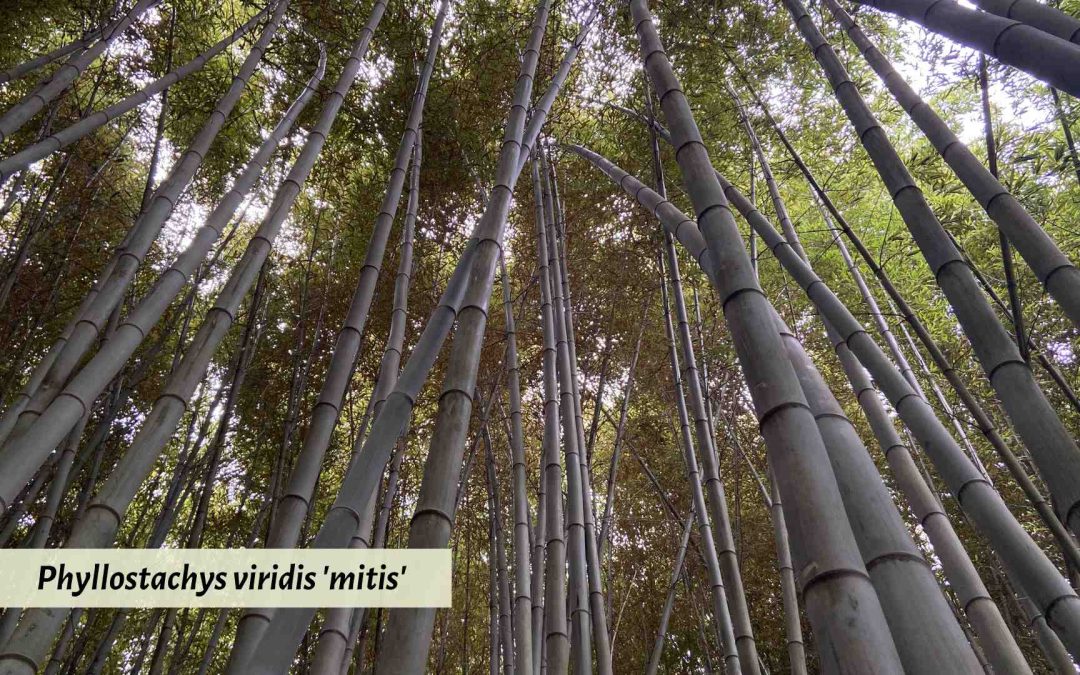
The story of Phyllostachys viridis ‘mitis’ is less well-known than other bamboo legends, but certainly worth a place in the annals of bamboo literature. The mindboggling diversity, rich history, and extraordinary range of uses for bamboo are all enough to fill a decent-sized library. But it’s the legends and fables surrounding bamboo that can truly captivate the casual readers, those who aren’t seeking to attain a black belt in botany or to become a Jedi Master of perennial grasses. Perhaps you’ve heard about the bamboo flowering events in India that have led to rodent infestations and local famines, or the unstoppable holocaust-proof bamboo that survived the bombing of Hiroshima. These historic episodes are fascinating and edifying, but the tale of Phyllostachys viridis ‘mitis’ has its own special twist.
Characteristics of Phyllostachys viridis ‘mitis’
First things first, let’s take acloser look at this relatively uncommon cultivar of bamboo. Like all Phyllostachys, this is an East Asian variety native to China, and possibly Japan and Taiwan. It has running rhizomes and is cold-hardy to below zero Fahrenheit. P. viridis is a large timber bamboo, close in size to species like Moso and Madake. Under optimal, healthy growing conditions, the culms can reach close to 4 inches in diameter and about 40 feet in height.
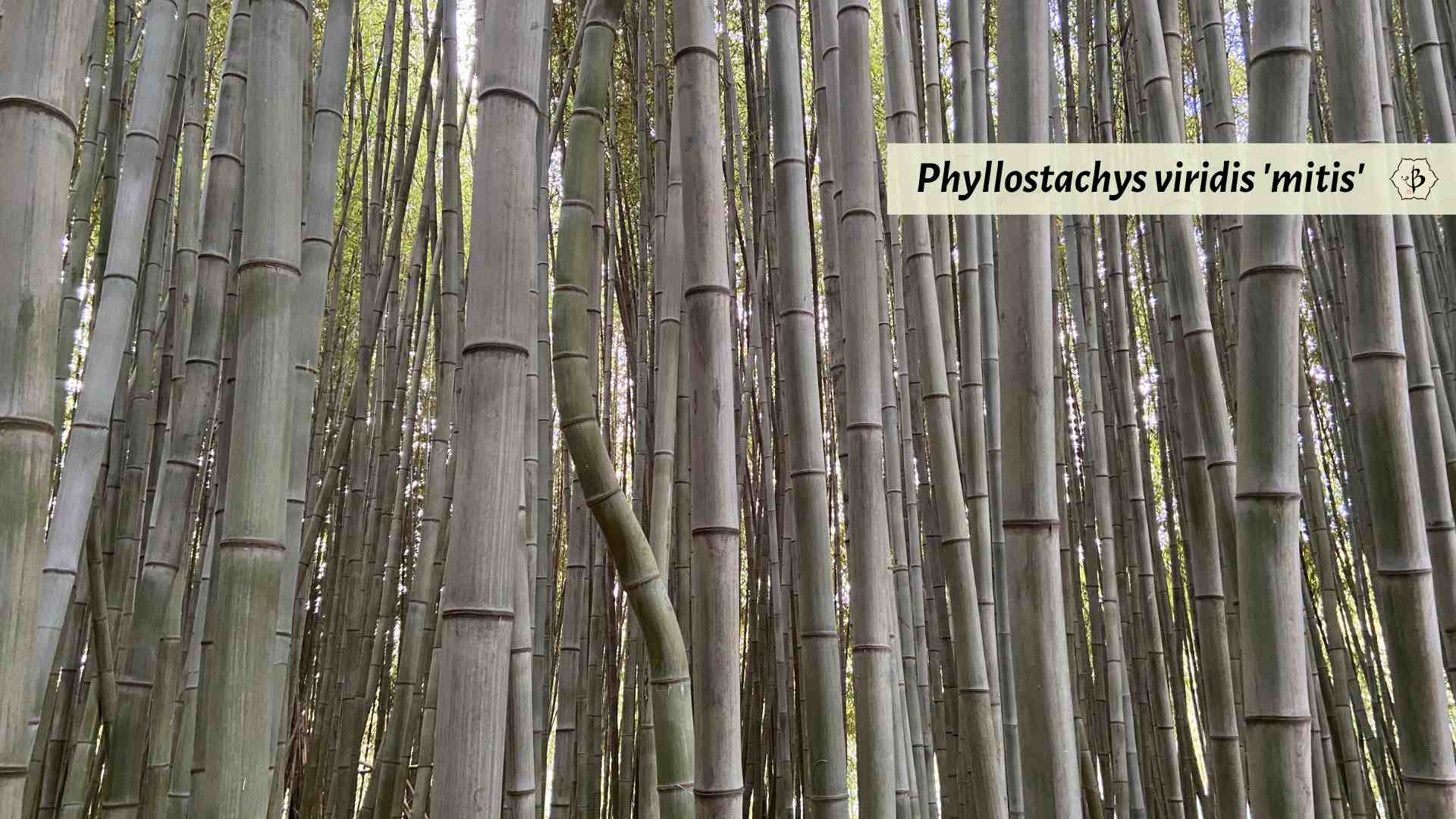
Botanically speaking, most authors classify this bamboo as a subspecies of P. viridis, making it a very close relative of the Robert Young variety. But unlike the buttery yellow culms with their alluring green stripes, the poles of Mitis bamboo have a greenish-gray color, resembling the illustrious Moso bamboo.
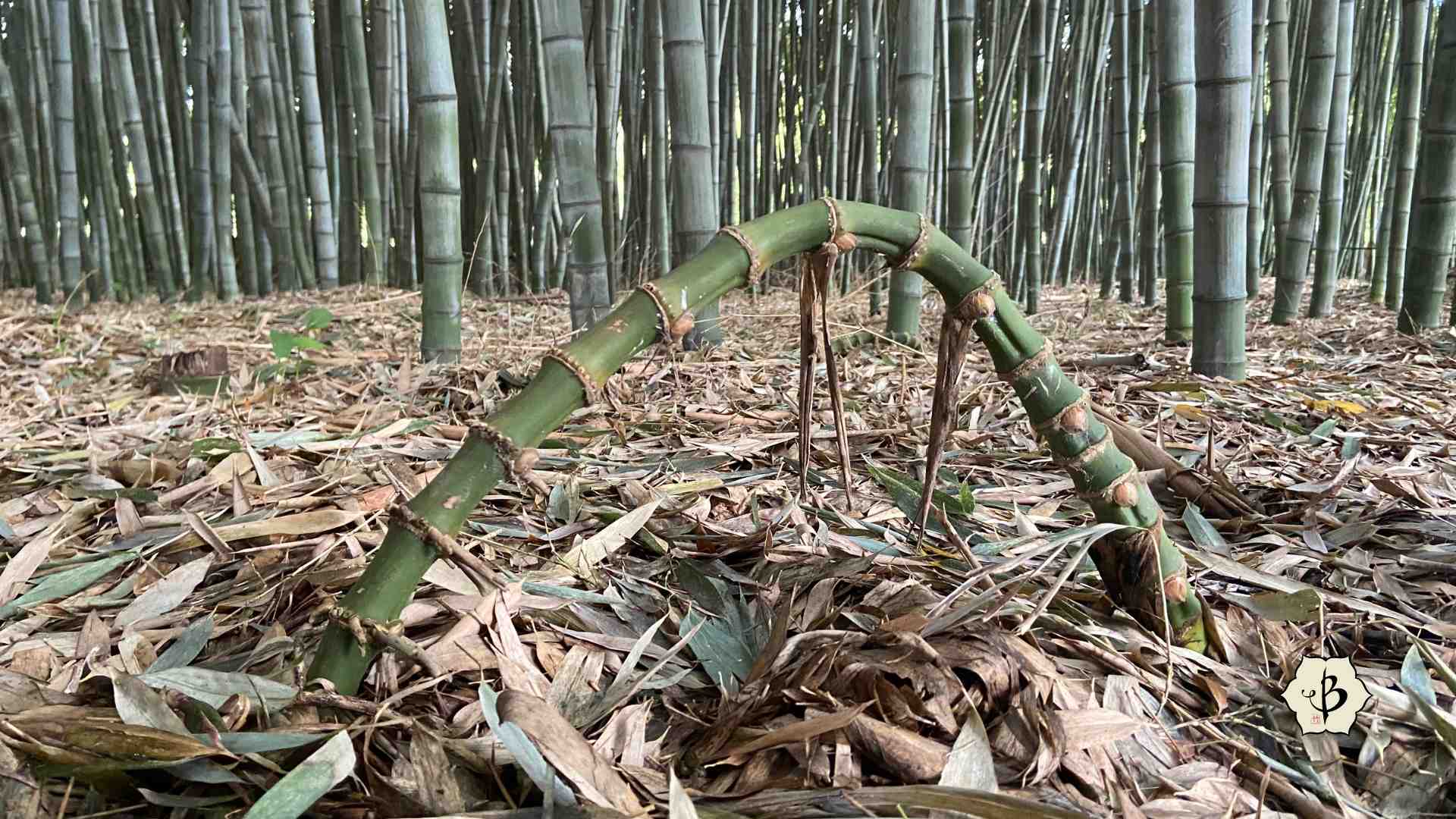
The casual onlooker could easily mistake a mature grove of Mitis for a stand of Phyllostachys edulis or Phyllostachys bambusoides. But on closer inspection, P. viridis ‘mitis’ hasn’t got the same regal elegance of those superior varieties. Instead, a significant portion of the culms display a wendy-bendy, irregular stature. For ornamental purposes, this feature can add some visual interest. But if you’re growing bamboo for straight, upright poles ideal for building and construction, you may be sorely disappointed.
A twist of fate: The myth of the ‘mitis’
As a lover of literature and mythology, what I really enjoy about this bamboo, apart from the gorgeous, powdery gray-green culms that I observed on a recent trip to the South of France, is the enchanting story behind it. Maybe it’s true, and maybe it’s just a local legend. But does that really matter? Are Harry Potter stories worth anything less just because they aren’t true? Hardly.
According to other farmers and bamboo aficionados in this region around Toulouse, France, this distinct species came as a gift from a travelling bamboo master from the Far East. Around the late 1800s and early 1900s, bamboo was seriously trending in France, where the Asian runners happen to grow exceptionally well.
But as often happens when two cultures clash, and there’s an obvious information asymmetry, the nefarious specialist may take the unknowing enthusiast for a ride. Passing it off as a most majestic and upright variety of bamboo, the travelling trickster disseminated crooked bamboo cuttings across the fields and pastures of Provence, Languedoc, and beyond. A century later, the landscape is spotted with these mysterious groves of non-native, zigzagging bamboo.
While the curious French farmers thought they were signing up for the exquisite specimens they had seen at world expos and in Japanese prints, they had actually been suckered into some cheap imitation or inferior knock-off.
Like the bamboo itself, the story may not form a perfectly straight line, but it offers a valuable lesson and gave me a hearty chuckle when I first heard about it. And in the end, I’m of the opinion that the French ultimately got the better end of the deal. They can now showcase this rare and exceptional species, beautiful not for its uniformity, but for its distinguishing character.
Related reading
If you enjoyed this uncanny account of bamboo subterfuge, you might try digging a little deeper into the real stories and science behind this marvellous grass.