If you’re fascinated like I am by useful bamboo species from South and Southeast Asia, then Bambusa tulda deserves your attention. Sometimes called Indian Timber Bamboo or Bengal Bamboo, this elegant tropical species has been cultivated for centuries for its versatility and remarkable utility. Tall, straight culms and dense clumps make it one of the most practical bamboo species in the region, while its graceful foliage lends it a refined ornamental quality.
Native to the Indian subcontinent, Bambusa tulda grows widely throughout India, Bangladesh, Myanmar, Thailand, and southern China. In some regions, this species plays an important role in daily life, supplying material for construction, crafts, paper pulp, edible shoots, and even musical instruments. Bamboo workers especially appreciate the long, straight internodes and relatively thin culm walls, which make the poles easy to split and work with.
This article is part of an ongoing series about various bamboo species. To learn more, be sure to check out our Complete Guide to Growing Bamboo and our comprehensive Directory of Bamboo Species. You may also find these other tropical bamboo species interesting:
Quick Facts about Bambusa tulda
- Scientific name: Bambusa tulda
- Common names: Indian Timber Bamboo, Bengal Bamboo
- Type: Tropical clumping bamboo
- Native range: India, Bangladesh, Myanmar, Thailand, southern China
- Climate: Tropical and subtropical monsoon climates
- Cold tolerance: Minimal frost tolerance
- Mature height: 40–60 feet (12–18 m)
- Culm diameter: 2–4 inches (5–10 cm)
- Growth habit: Dense sympodial clumping bamboo
- Culm characteristics: Straight green culms with long internodes
- Primary uses: Construction, paper pulp, crafts, furniture, edible shoots, musical instruments
- Growth rate: Fast-growing during the rainy season
- Soil preferences: Moist, fertile, well-drained soils
- Water needs: Moderate to high
- Best ornamental feature: Graceful upright culms with lush foliage
- Propagation: Culm cuttings, rhizome divisions, offsets
- Commercial value: Highly versatile and widely cultivated in South Asia
Characteristics of Bambusa tulda
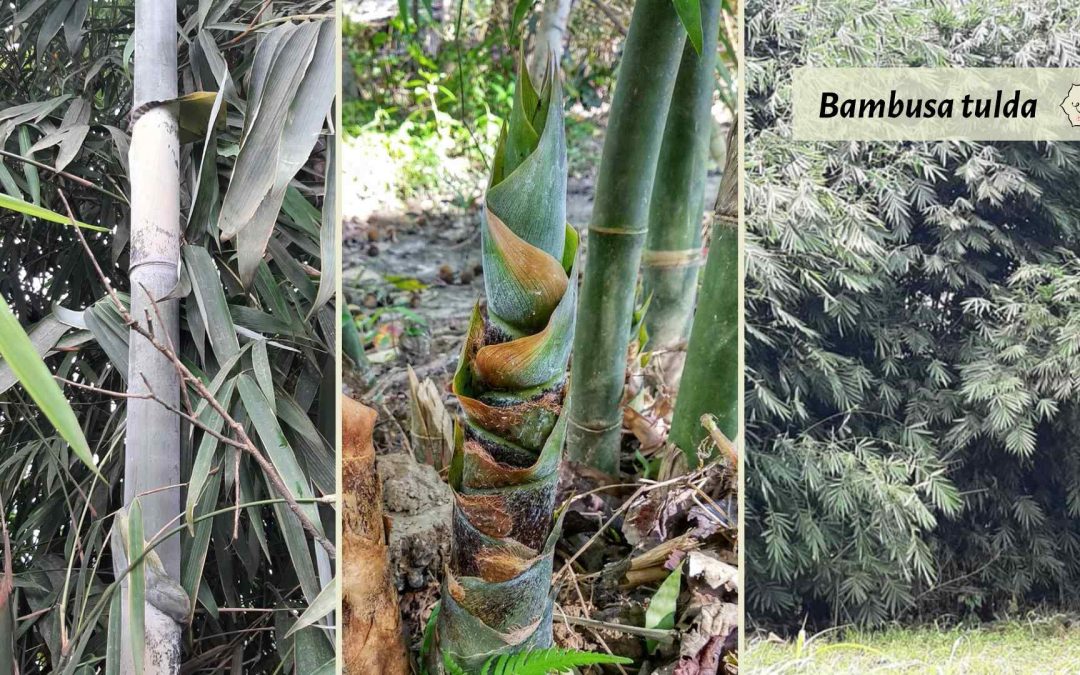
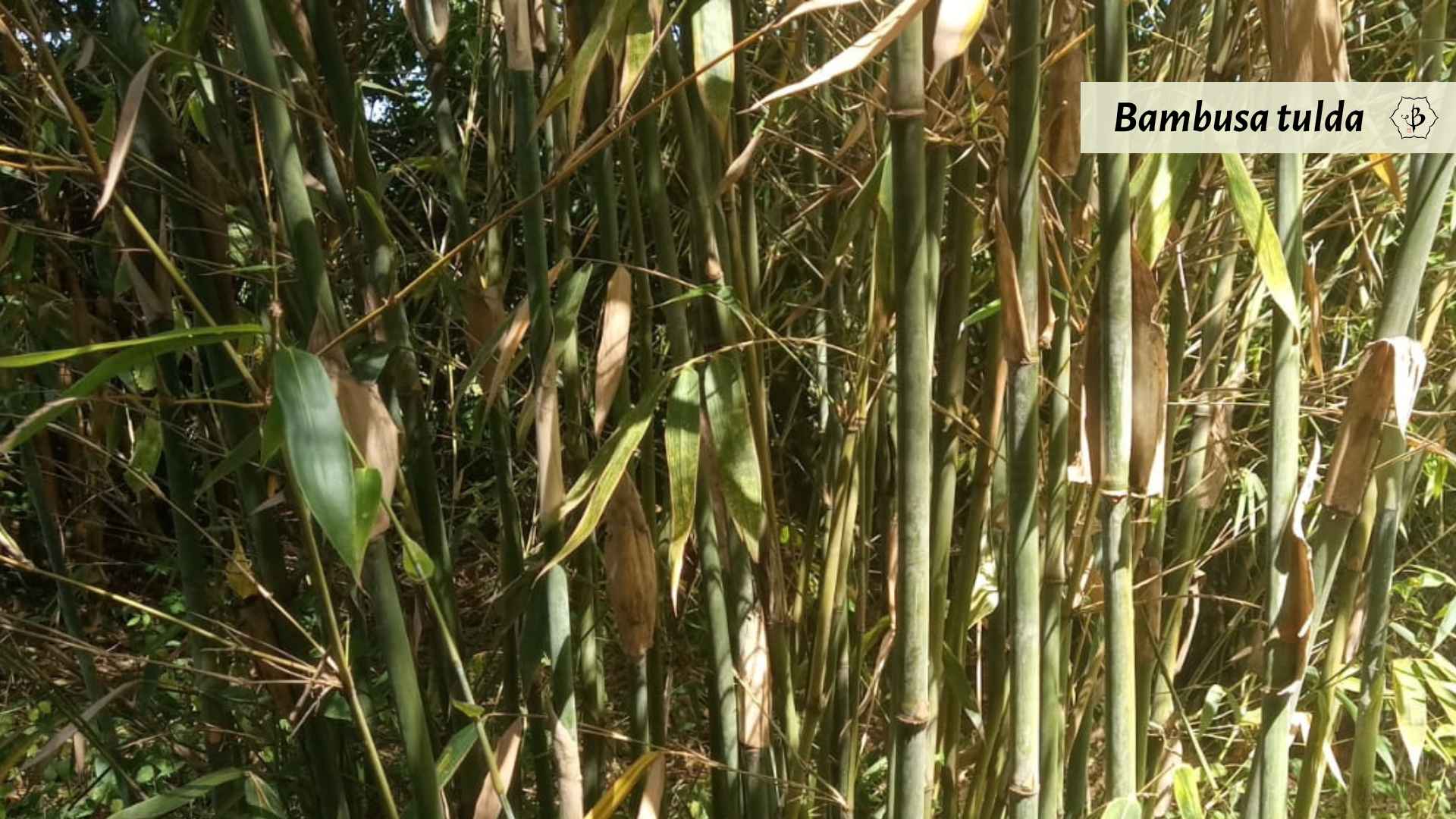
Like most members of the Bambusa genus, Bambusa tulda is a tropical clumping bamboo with dense growth and multiple branches emerging from each node. Mature clumps can reach an impressive size, especially in warm, humid climates with ample rainfall.
The culms are generally green to gray-green with a smooth surface and a clean, upright posture. Under ideal conditions, Bambusa tulda commonly grows 40 to 60 feet tall, with culms about 2 to 4 inches in diameter. The poles are relatively straight compared to many other tropical species, making them especially useful for a range of applications.
One of Tulda’s most attractive features is its upright, elegant stature. The otherwise dense lower branches are often removed to expose the lengthy culms that rise into a canopy of lush green leaves. Mature clumps can form an expansive, idyllic grove that many bamboo lovers find irresistible.
The internodes are usually long and straight, and the culm walls are moderately thick but not optimal for heavy construction. Craftsmen throughout India and Bangladesh have long taken advantage of this lightweight property to create woven mats, baskets, fishing poles, scaffolding, furniture, and all manner of household products.
Like many tropical bamboo species, Tulda grows quickly during the rainy season. Fresh shoots emerge with astonishing vigor, sometimes growing more than a foot per day under favorable conditions.
Distribution and native habitat
Bambusa tulda is native to the humid tropical and subtropical regions of South Asia. The species grows especially well in northeastern India and Bangladesh, where warm temperatures, monsoonal rainfall, and fertile alluvial soils create ideal conditions for bamboo cultivation.
Unlike drought-tolerant African species such as Oxytenanthera abyssinica, Bambusa tulda performs best in climates with dependable seasonal moisture. Prolonged dry seasons will slow growth and reduce shoot production.
Today, Bambusa tulda grows widely across tropical Asia and has also been introduced to parts of Africa and Latin America for farming and restoration projects. Because of its rapid growth and dense rhizome network, the species is also useful for stabilizing slopes and reducing erosion in areas with heavy rainfall.
Uses for Bambusa tulda
Among tropical bamboo species, Bambusa tulda has one of the widest ranges of practical applications. Although not as massive as giant timber species like Dendrocalamus asper or D. giganteus, Tulda often proves more versatile due to its manageable size and superior workability. In many rural communities, the species functions like the Swiss Army Knife of the plant kingdom.
The straight culms with moderate thickness make excellent material for a vast array of products, including fencing, furniture, woven goods, and agricultural implements. Historically, large quantities of this species were harvested for the paper industry throughout northeastern India. The fibers process efficiently and produce a strong finished paper product
The fresh shoots are also edible when properly prepared. Young bamboo shoots are widely consumed throughout Asia and remain an important seasonal food source in some rural communities.
In parts of Asia, the species is commonly used for bamboo flutes and traditional instruments because of its straight, smooth internodes and workable texture.
Propagation and cultivation
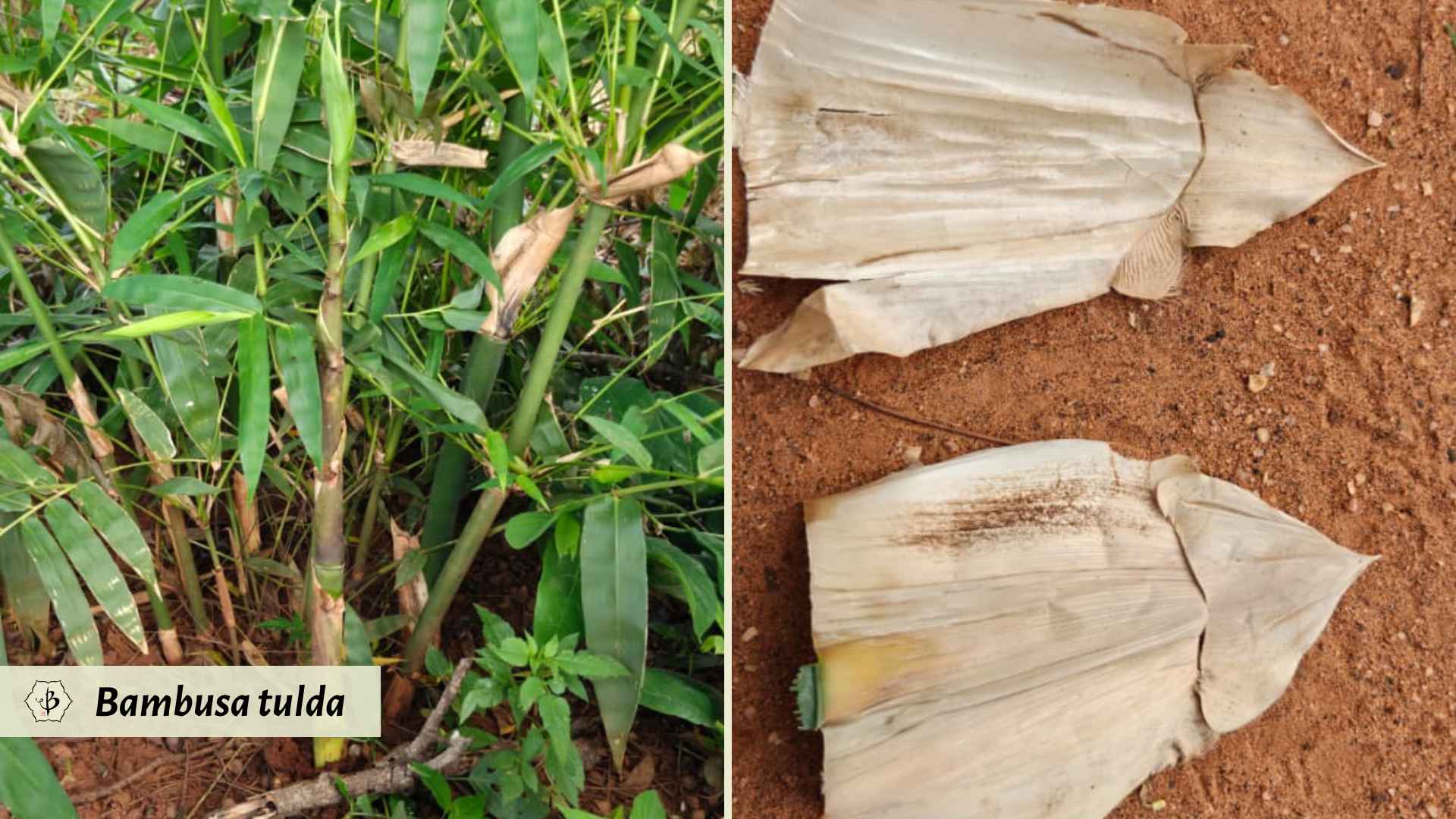
Like most clumping bamboo species, Bambusa tulda is usually propagated through culm cuttings, offsets, or rhizome divisions. Under tropical conditions, with adequate moisture, the plants can establish quickly and form dense clumps within a few years. Once mature, the species becomes vigorous and resilient, although still preferring humid conditions.
Like most bamboo, Bambusa tulda responds well to selective harvesting and clump management. Removing older culms improves airflow, creates open space, and encourages healthy new shoot production.
Because the clumps can become very dense over time, periodic thinning is often recommended for both productivity and appearance.
Flowering behavior of Bambusa tulda
Bambusa tulda, like many bamboo species, flowers infrequently and unpredictably. Reports of flowering cycles vary considerably, but large flowering events can sometimes cause large numbers of plants to die back.
Mass flowering events among Melocanna baccifera, also native to northeastern India, have historically contributed to ecological disruption and surging rodent populations. Fortunately, flowering remains relatively uncommon, and healthy clumps can remain productive for decades under good conditions.
Indian Timber Bamboo in the modern bamboo economy
As global interest in sustainable materials continues to grow, Bambusa tulda is attracting renewed attention. Like many bamboo varieties, this species combines rapid growth and renewability with great utility and ease of processing.
For small farmers and rural entrepreneurs, especially in areas like Assam State, in northeast India, Tulda and other bamboo species can provide an abundant supply of biomass, building material, edible shoots, and handicraft products. At the same time, the well-managed use of this vast resource creates jobs and economic opportunity in a relatively underdeveloped part of the world.
Unveiled in 2025, the Bamboo Orchids Terminal at the Guwahati Airport in Assam, India, is one of the most impressive and ambitious examples of bamboo architecture to date. (See image below.)

Meanwhile, restoration projects increasingly recognize the value of bamboo for erosion control, soil restoration, and carbon sequestration.
Bambusa tulda may not have the towering majesty of Giant Dragon Bamboo or the dramatic coloration of Black Bamboo, but its quiet reliability and extraordinary usefulness have made it one of Asia’s most enduring bamboo species.