Most of the bamboo in the world comes from Asia, particularly China, India, and Indonesia. But a brief tour through rural Colombia is enough to make you believe otherwise.
Native to the equatorial highlands of Colombia, Guadua angustifolia is the most important bamboo species of the Western Hemisphere. This exceptional species is considered the hardest and one of the best bamboo varieties for building and construction. It’s sometimes called Iron Bamboo. In addition to its remarkable size and strength, Guadua is interesting for other characteristics, including its open clumping growth habit and its pesky thorns.
Guadua can grow nearly 100 feet tall and up to about 5 or 6 inches in diameter. In order to thrive, it requires a tropical climate without frosts and without dramatic shifts between day and nighttime temperatures. This species flowers sporadically, rather than gregariously, without causing the plant to die afterwards.
This article is one among many that describe different species of bamboo. To learn more, head over to our Complete Guide to Growing Bamboo and our comprehensive Directory of Bamboo Species. If you’d like to source high-quality Guadua bamboo poles or products from Latin America, you can reach out directly to Bambu Batu.
NOTE: This article first appeared in July 2024, most recently updated in July 2026.
Quick Facts about Guadua angustifolia
- Type: tropical clumping / open-clumping bamboo
- Native Habitat: Equatorial, South America (Colombia, Ecuador, Venezuela)
- Height: up to 100 feet
- Diameter: 5–6 inches
- Climate: frost-free, tropical
- Uses: construction, scaffolding, furniture, erosion control, agroforestry
- Edible: No
- Distinguishing Features: sharp thorns, short internodes, white bands around the node joints
Why Guadua is important in Colombia
Guadua angustifolia is so ubiquitous in Colombia that “Guadua” is actually used as a synonym for bamboo. Especially happy at elevations between 1000 and 2000 meters above sea level, you can find giant patches of Guadua growing all across the landscape. Most often though, it is found growing in rifts where the water collects.
If you are looking for creeks and rivers, of which the mountains of Colombia have many, just follow the Guadua. Like all bamboo, Guadua won’t grow directly in water, but it thrives in moist soil along the waterways. Symbiotically, the robust rhizomes of Guadua do a fine job of holding the riverbeds together and preventing erosion on the steep slopes.
The Colombian government classifies Guadua as a tree and protects the majestic species from deforestation. Permits for commercial harvesting are required and difficult to obtain. This ensures that the presence of this stunning giant bamboo continues, but the policy has also had the effect of stifling the country’s bamboo industry. At the same time, collecting Guadua poles for personal use and light construction around the farm is tolerated. In fact, it is sometimes necessary, when the bamboo starts to encroach on the grange.
Guadua and its unusual growth habit
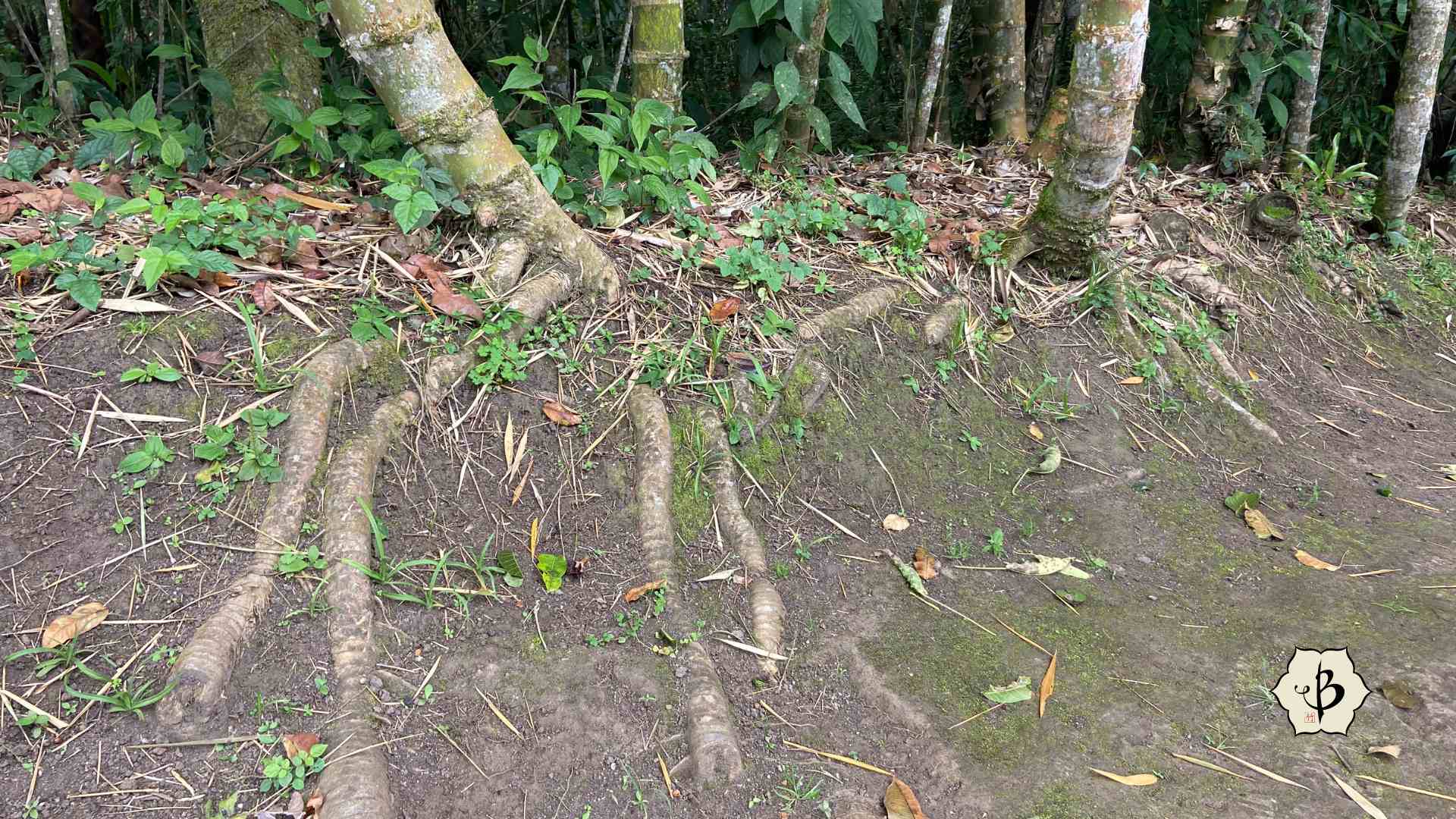
Unlike most clumping bamboo, Guadua spreads outward before sending up new culms, creating loose groves that resemble running bamboo forests.
When classifying a species of bamboo, the first question is usually: running or clumping? Runners have monopodial rhizomes that stretch horizontally beneath the surface, growing ever outward and sporadically putting up new culms. The result is a thick grove of bamboo culms. Clumpers have sympodial rhizomes that curl up, with a U-shape, producing one new shoot or culm, usually right next to the other culms, creating a dense cluster of poles.
Guadua is a tropical species, technically referred to as a neotropical bamboo (from the New World, ie, America). Like all tropical bamboo, it has sympodial rhizomes. But unlike most clumpers, the rhizomes reach up to a meter or two before growing upward and forming culms. This growth habit makes a grove of Guadua look much more like a grove of running Moso than a tight clump of Bambusa or Dendrocalamus.

Guadua as a building material
Although native to South America, Guadua is prized around the world for the strength of its poles. Experts and aficionados debate whether Guadua or Giant Asper produces the strongest building material.
Guadua for timber and construction
Bamboo is famously useful, sturdy, and resilient. Guadua angustifolia shares all those characteristics, but times ten. You can find luscious groves of Guadua flourishing in valleys and on hillsides throughout the country. So the locals are fully aware of this majestic plant and its incredible usefulness. Farmers rely on the hefty poles to construct sheds, fences, and light structures of all kinds.
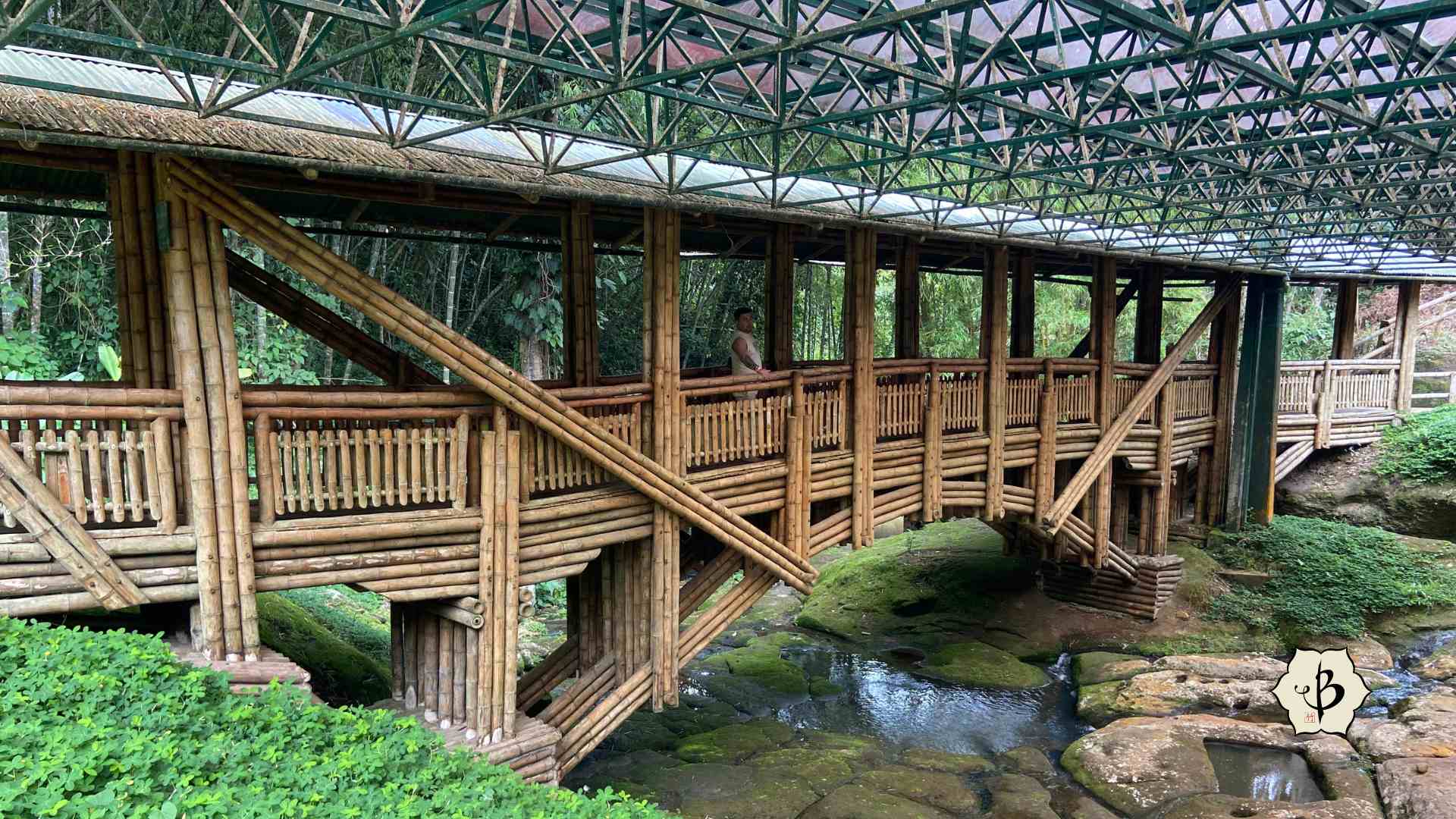
Those with more resources are able to build more impressive structures such as bridges, restaurants, and pavilions. Building with hollow poles demands some special skills, and master bamboo craftsmen like Simon Velez and Jorg Stamm regularly host workshops to share these skills with other aspiring builders. In my experience, I would say that the bamboo buildings of Colombia are rivaled only by those from Bamboo U and the Green School in Bali, Indonesia.
Harvesting practices
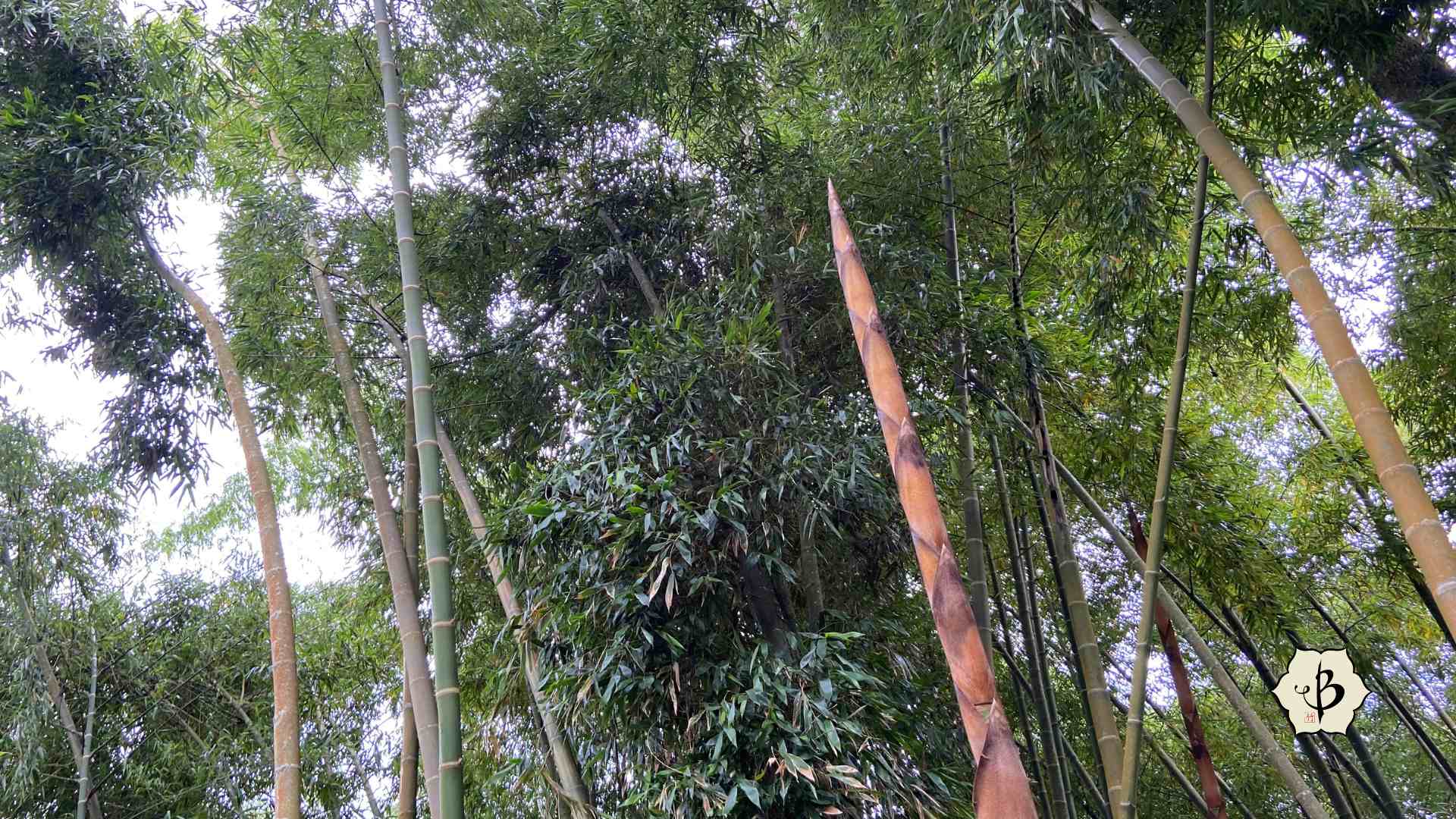
The loose-clumping nature of this bamboo variety makes the groves easier to manage than the more dense-clumping species. The sharp thorns, on the other hand, make Guadua somewhat challenging to work with.
National policies on Guadua in Colombia
In Colombia, Guadua angustifolia enjoys a special status as a protected tree. To collect these abundant poles for commercial purposes, one needs a special harvesting permit, which is not easy to obtain. Still, there are a small handful of bamboo companies that legally export containers of top-quality Guadua culms to Europe and North America. Alternatively, Bambu Batu sources Guadua poles and products from other regions of Central America, where responsible harvesting practices are still observed, but without the government red tape.
In July 2026, Colombia’s Ministry of Environment issued Resolution 0806, regulating Ley 2206 of 2022 to create a free, voluntary national registry for natural (wild) guadua and bamboo stands, ecosystems that protect water sources, soils, and biodiversity. Landowners, campesino organizations, and indigenous communities can register online at no cost, and doing so is a prerequisite step toward applying for sustainable-use permits, though it doesn’t alter land title or existing harvest rules. The registry applies specifically to naturally occurring stands. Planted commercial bamboo continues to be regulated separately through Colombia’s agricultural institute (ICA), so this measure is best understood as a conservation and mapping initiative rather than a change to the commercial cultivation regime.
Biodiversity and agroforestry with Guadua
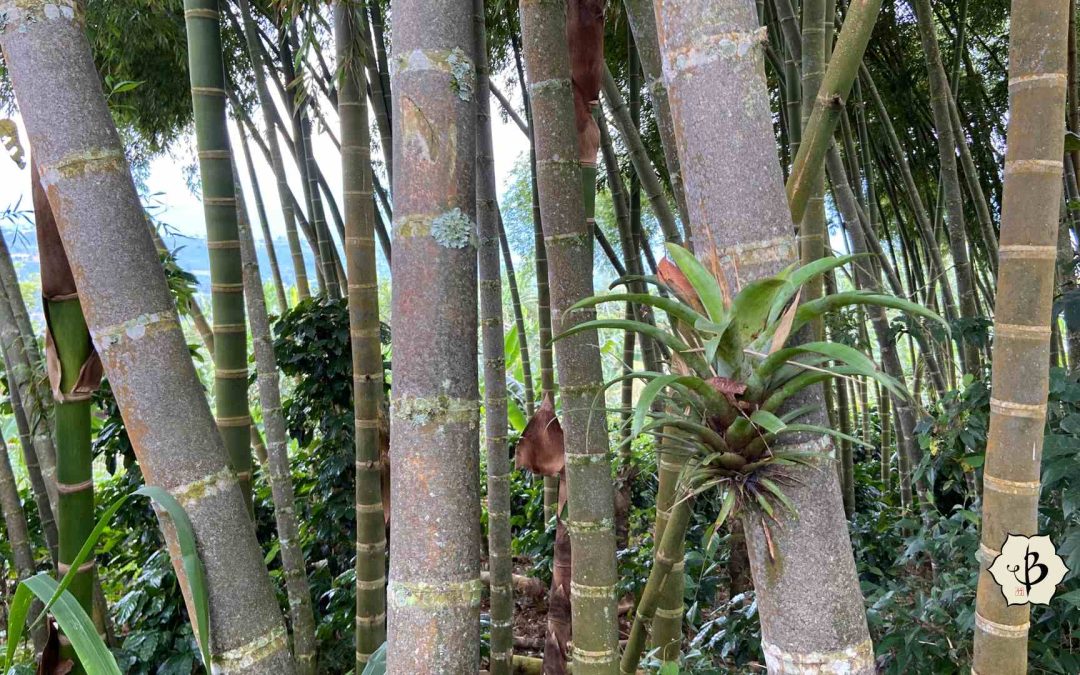
Colombia boasts some of the most biodiverse landscapes in the world, and this is evident even in the midst of a robust Guadua grove. Orchids and bromeliads populate the ridges of older bamboo culms, and the air is teeming with birds, insects, and butterflies of all kinds.
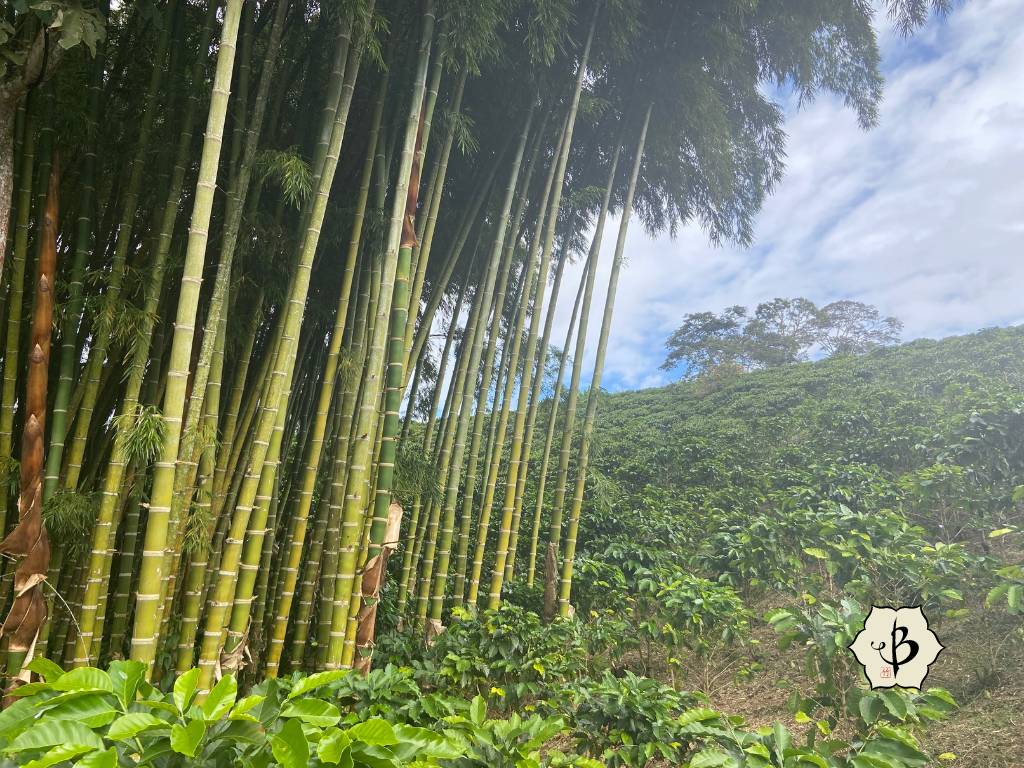
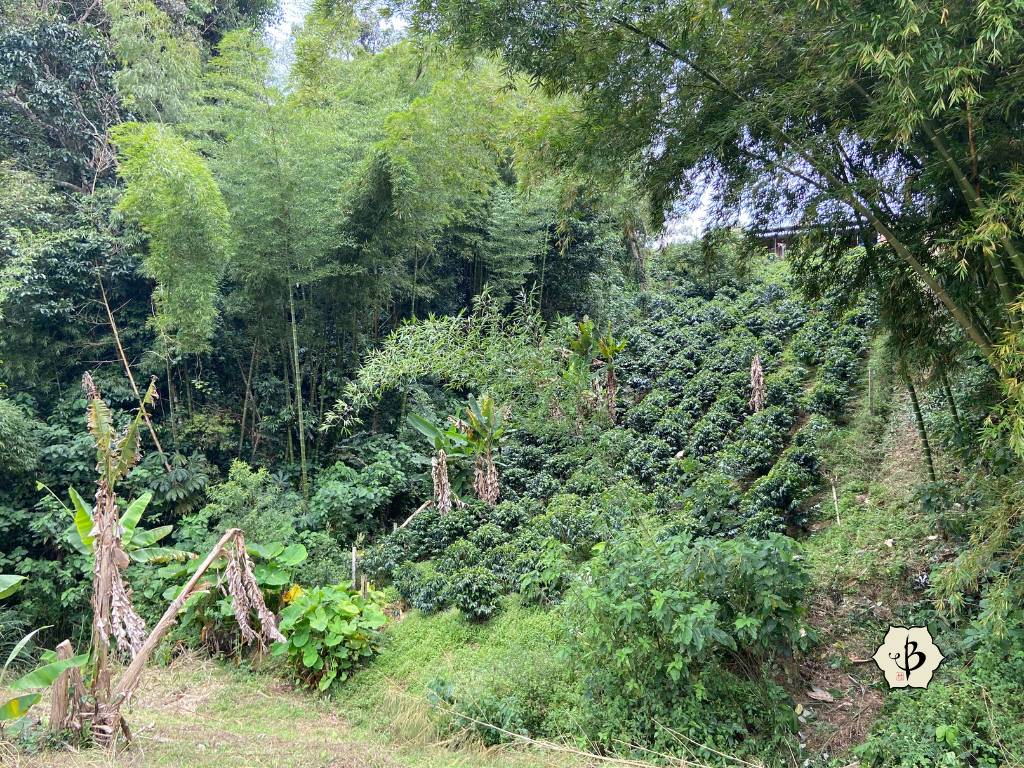
Meanwhile, on the coffee farms that cover the majority of cultivated land in the country, we find all manner of intercropping, with plantains, yuca, corn, and tropical fruit trees. Most interesting to me, naturally, was the companion planting of coffee alongside native stands of giant iron bamboo. Colombia is the number one coffee producer in the world, so it’s beautiful to see these two botanical superheroes joining forces.
Growing Guadua elsewhere in the world
Because of Guadua’s superior properties as a giant timber bamboo and extraordinary building material, many will ask, “Can I grow Guadua where I live?”
The answer, of course, depends on where you live. And some patience may be necessary. I used to believe that Guadua could not survive outside its native habitat in South America. Guadua definitely requires a tropical setting with abundant precipitation and no chance of frost, meaning that it won’t grow in a Mediterranean zone like southern Europe or California, even though most plants do so well there. Attempts to grow Guadua in Florida have also failed, probably in part because it prefers higher elevations.
Until recently, I wasn’t aware of any Guadua cultivation in Southeast Asia, where tropical bamboo truly thrives. But now I think this had more to do with awareness than adaptability. With the abundance of excellent bamboo varieties already available in Thailand, Indonesia, and the Philippines, why would they need to plant Guadua? But as interest in bamboo continues to grow, bamboo lovers around the world are increasingly interested in introducing new and exotic species.
In 2024, I had the pleasure of visiting a bamboo garden in the Philippines with a large collection of Guadua. To be honest, the plants appeared to be struggling, perhaps due to the different weather patterns and the long dry season. But in time, I think they will establish and grow quite well. It will probably take 10 to 15 years for Guadua to get established and produce full-sized, premium poles. I also know of nurseries in Kenya and West Africa that are now growing Guadua and reporting positive results. It’s definitely something worth keeping an eye on.
Learn more
If you enjoy learning about bamboo species from around the world, you might also like to peruse some of these articles.
FEATURE IMAGE: Guadua angustifolia flourishes among the bromeliads in the tropical highlands of Colombia. Photo by Fred Hornaday.