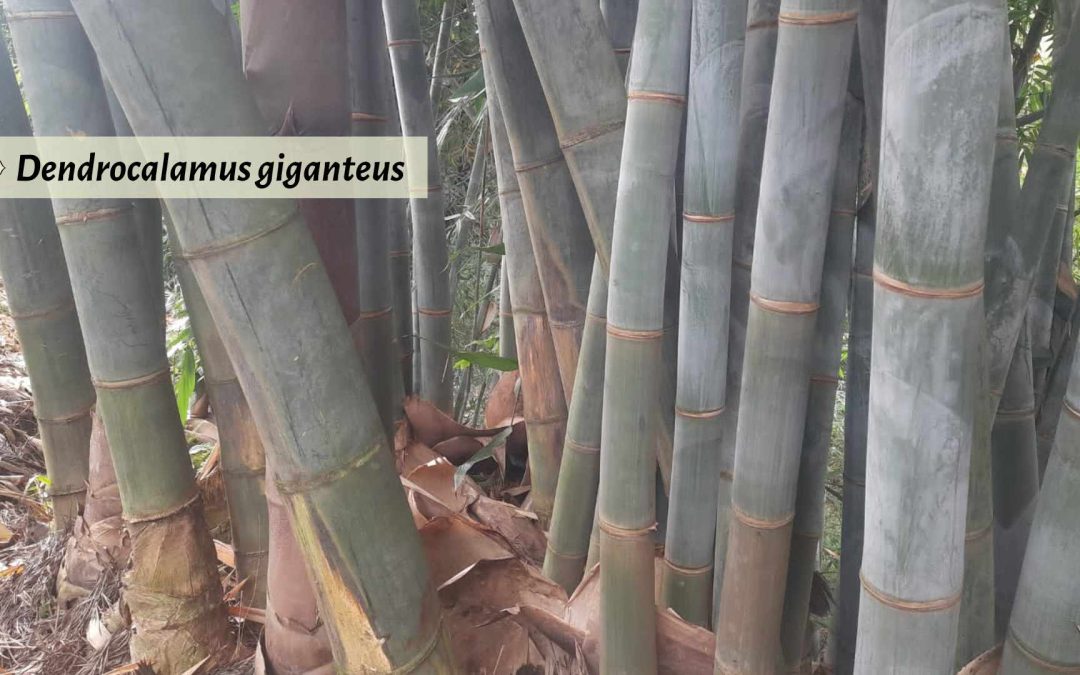
Dendrocalamus giganteus is one of the most stunning of all bamboo species. Native to the tropical climes of Indonesia and Southeast Asia, this formidable specimen can often reach more than 100 feet in height, with culms as large as 6 or 7 inches in diameter. The name “Giant Bamboo“ can refer to a wide range of bamboo species, also including Asper and Guadua, but this is the only bamboo with the scientific name Giganteus.
This article is part of a series describing dozens of different bamboo species. To learn more, head over to our Complete Guide to Growing Bamboo and our comprehensive Directory of Bamboo Species.
You can learn about other big bamboo species here:
- Running bamboo vs Clumping bamboo
- Dendrocalamus strictus: Calcutta bamboo
- Bambusa oldhamii: The most popular bamboo
NOTE: This article was first published in August 2024 and most recently updated in May 2026.
Characteristics of Dendrocalamus giganteus
Quick Facts
- Botanical name: Dendrocalamus giganteus
- Common names: Giant Bamboo, Giant Tropical Bamboo
- Bamboo type: Tropical clumping bamboo
- Native range: Southeast Asia and Indonesia
- Mature height: 80–100+ feet
- Culm diameter: up to 6–7 inches
- Cold hardiness: About 28–30º F
- Growth habit: Large, dense clumper
- Special features: Massive smooth culms with minimal lower branching
- Primary uses: Ornamental planting, light construction, biomass
- Best climate: Tropical and subtropical regions
Although several species are informally known as giant bamboo, Dendrocalamus giganteus is the species most directly associated with that name in botanical literature.
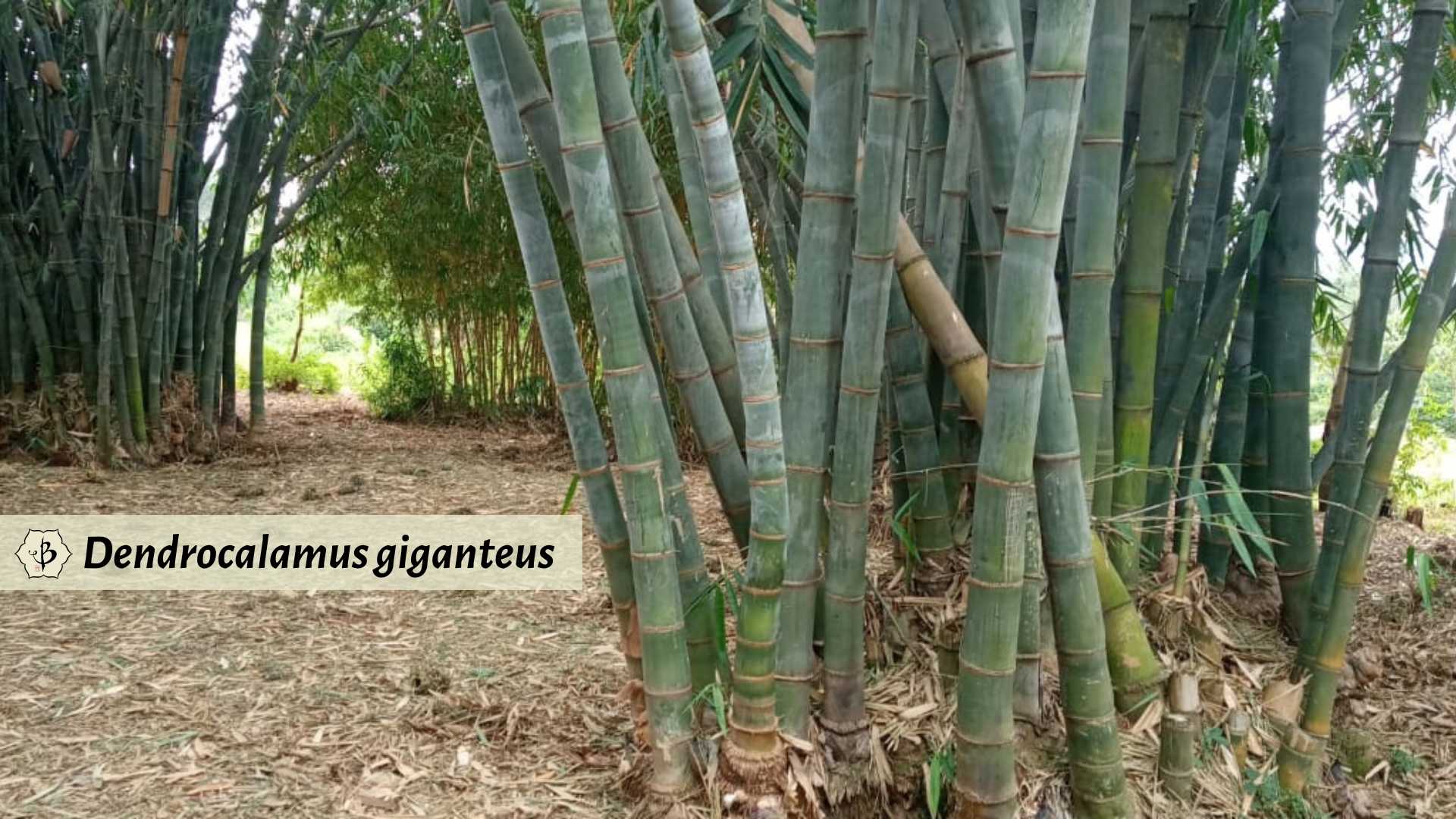
As this name suggests, the most noteworthy feature of giganteus is its staggering size. Members of the genus Gigantochloa don’t even come close. Unlike other giant bamboo species, such as Dendrocalamus asper and Guadua angustifolia, D. giganteus is especially suitable as an ornamental. The prepossessing culms are smooth and free of thorns.
Like other tropical bamboo and all varieties of Dendrocalamus, this is a clumping bamboo, and its canes are generally packed together pretty tightly. You don’t have to worry about it spreading the way temperate bamboo does, but you will need to allow it a wide berth. Once fully established, the total footprint can easily cover a diameter of 15-20 feet. To reach its full potential, this bamboo will require tropical conditions. It can survive mild frosts, but they will stunt the plant’s growth and prevent it from growing to full size.
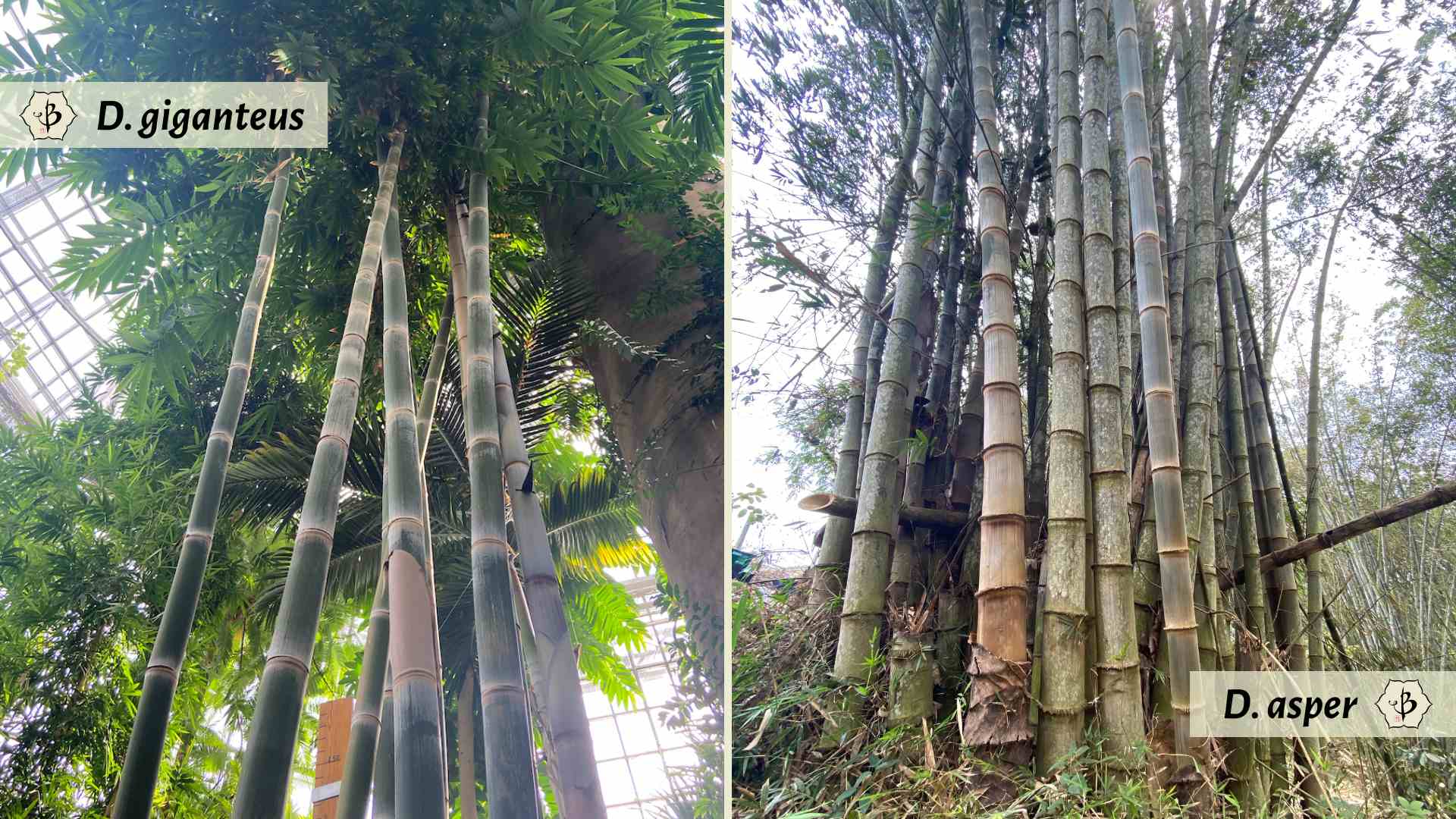
Dendrocalamus asper vs. Dendrocalamus giganteus
The closest relative to Giganteus is Asper, one of the most popular cultivated species for tropical timber. They are similar in size, both in height and thickness. And both species grow without thorns and generally produce no branches on the lower halves of the culms.
The best way to tell these two apart is by the furry nodal joints on Asper. As seen in the image above, Asper is very rough and hairy around the nodal rings, while Giganteus is smooth.
Without a doubt, however, Asper is a superior species for building and construction. Giganteus poles are not nearly as strong and sturdy, lacking the wall thickness of the mighty Asper.
Cultivating Dendrocalamus giganteus
As bamboo farming and forestation become increasingly popular, Giant Bamboo is gaining increasing attention. And with gigantic size comes giant potential for carbon sequestration and biomass production. Although Asper is generally considered a superior species for building material, the smooth surface of Giganteus makes it noticeably easier to work with.
Consider the climate. To flourish and be commercially viable, this species needs a tropical setting with zero frost and ample precipitation. The minimum rainfall is about 1500 mm per year; otherwise, irrigation will be necessary.
You can probably get up to 300 clumps per hectare, slightly more in drier climates, and fewer in a very wet climate. With abundant water, the bamboo will get really big, so allow them the space to do so. Besides Southeast Asia, it grows very well in equatorial Africa, such as Kenya.
Ornamentally, this species also does pretty well in most of Florida. Just be sure you have the room for it before you transplant a sapling next to your garage. I’ve also seen some Giganteus in Southern California, although it’s not the ideal climate. Still, even when this species only achieves 60-70% of its potential, it can make quite an impression.
Further reading
To learn more about other exceptional species of tropical bamboo, take a look at some of these in-depth articles.