A greenhouse is a warm, humid, wet place, which is exactly the kind of environment that tests a bamboo structure. And yet bamboo keeps showing up in greenhouse designs, because it’s cheap, local, and quick to build with. For a smallholder farmer, the difference between a greenhouse you can afford and one you can’t often comes down to the frame.
I recently went through three very different bamboo greenhouse projects: a village build in Indonesia that combines a bamboo tunnel with fish ponds and solar power, a modular design in Nepal aimed at making bamboo frames last longer, and a student concept from London that tries to replace plastic sheeting with bamboo paper. They tackle different problems, and together they say a lot about where bamboo works well in protected agriculture and where it still needs help.
In brief: Bamboo in the greenhouse
- Bamboo can make a low-cost frame from local materials, and a simple tunnel shape makes it easy for communities to build.
- Durability is the main weak point. The Nepal design is aimed squarely at keeping bamboo away from water.
- A greenhouse is a system. The Indonesian project treats the frame, water, fish, and power as one package.
- The next frontier may be the covering, not just the frame, though that idea is still at the concept stage.
A bamboo tunnel with fish and solar power (Indonesia)
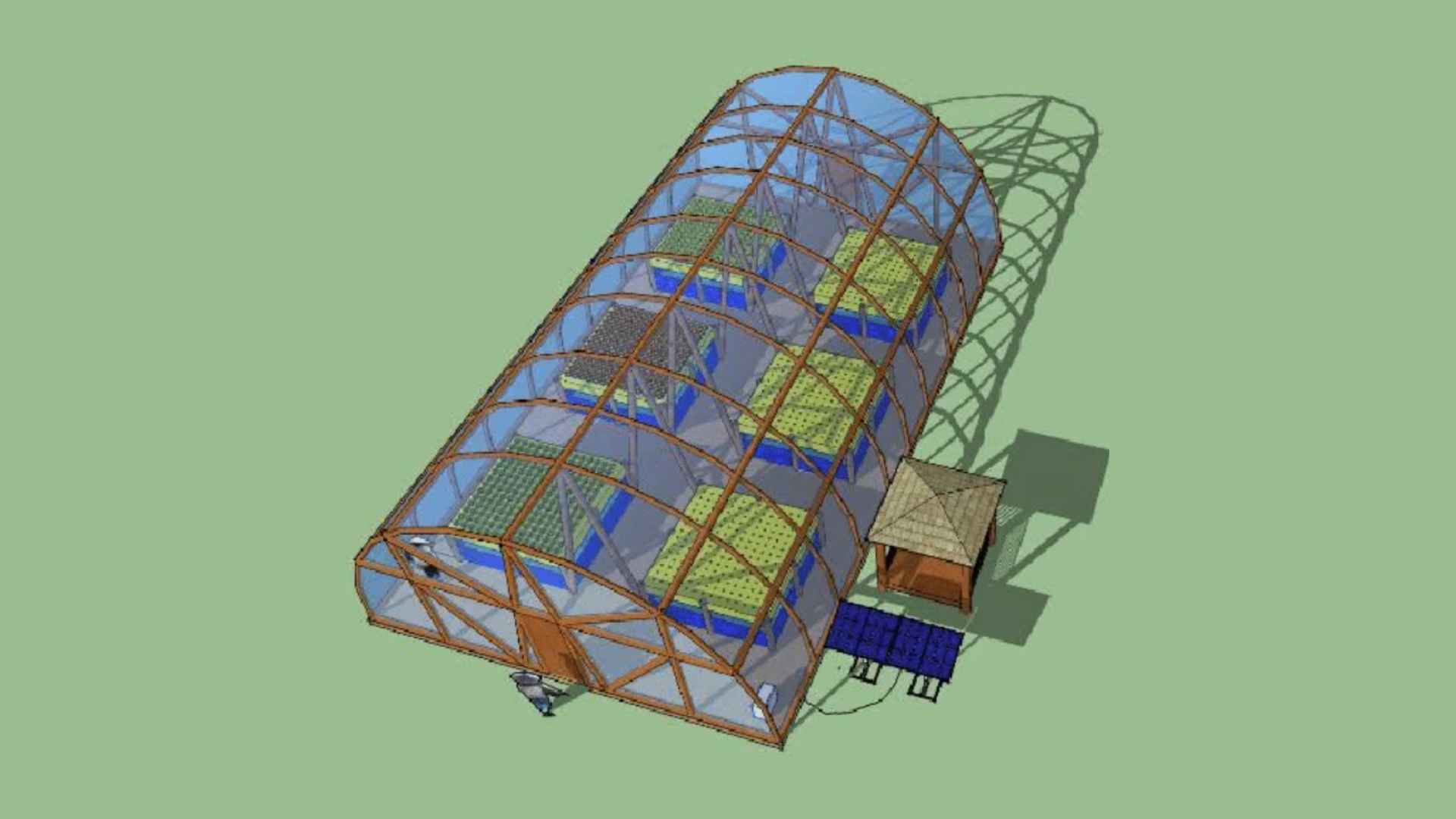
In 2019, a team from the University of Merdeka Malang worked with the residents of Grangsil hamlet, in Malang Regency, East Java, to build a tunnel-shaped bamboo greenhouse for what the researchers call “hydroganic” farming. The word combines hydroponic and organic. Plants grow in a water system, nourished by organic fertilizer and by water from a fish pond.
The community and university students built the bamboo frame together in 15 days, using the abundant bamboo that grows around the hamlet. The hydroganic installation, which used an aluminum frame, PVC-style pipes, and tarpaulin, took another six days. The solar system took two days to set up. It consists of four 100-watt panels, a battery, and an inverter, and it runs the water circulation pumps and the lights, so the greenhouse doesn’t need a generator or grid electricity.
The team planted lettuce and mustard greens and stocked catfish and tilapia in mid-August 2019, and harvested the first lettuce at the end of September. The researchers say the plants stayed healthy during a period when farmers couldn’t grow vegetables in the dry fields nearby, because the water was circulating continuously.
It’s an encouraging pilot, but a limited one. It covers a single growing cycle, and the paper doesn’t give yield figures, costs, or any data on how well the bamboo frame holds up over time. The electrical figures also don’t agree with each other from one section of the paper to the next. Treat it as a proof of concept, and a good illustration of how a bamboo structure can be one part of an integrated system.
A modular frame designed to last (Nepal)
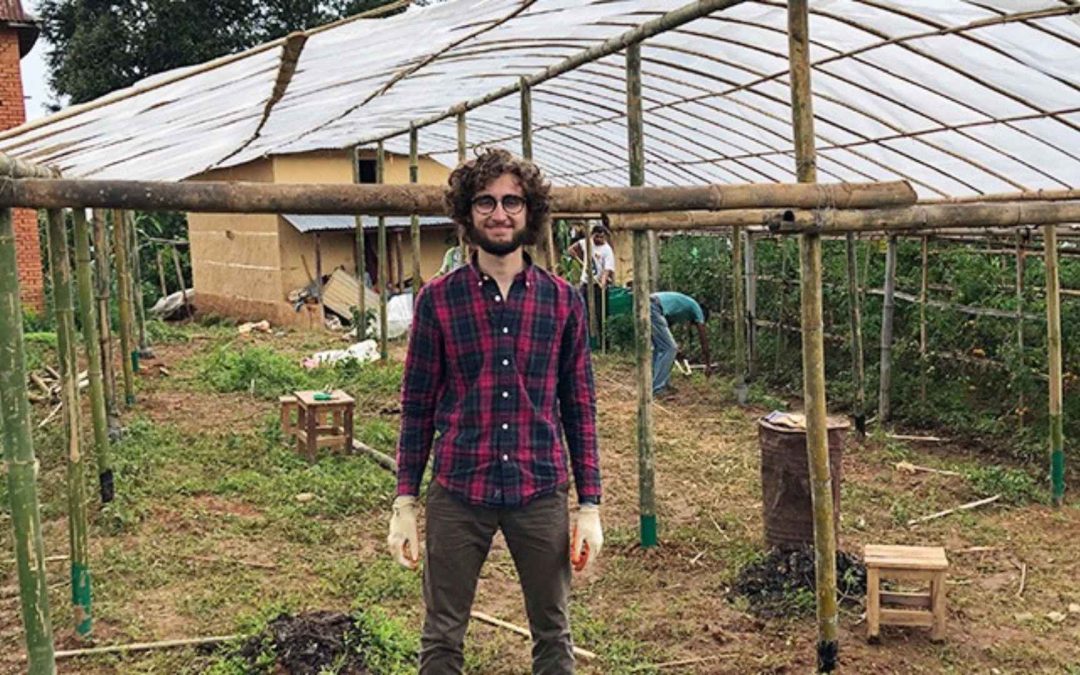
The second design comes from a different starting point. In Nepal, the nonprofit IDE Nepal was working on low-cost bamboo greenhouses for high-altitude farmers, who reported that the frames didn’t last. Matthew Baldwin, then an MIT student working through MIT D-Lab, took on the problem. The goal was to double a bamboo greenhouse’s life from five years to ten.
The approach is simple and sensible: keep water away from the bamboo. According to the Engineering For Change solutions library, the design uses tar and paint on the base of the bamboo poles and sets the posts in a concrete foundation, so that the bamboo doesn’t sit in direct contact with wet ground. The other materials are bamboo, waterproof plastic sheeting, and locally available supplies, using simple construction methods. Farmers can request a greenhouse through IDE Nepal.
Here’s the catch. The ten-year lifespan is the manufacturer’s specification, and the library lists the performance as not independently vetted. Baldwin’s own account says the team proposed several low-cost rot-prevention methods and asked IDE Nepal to check each one yearly, so the evidence takes years to build up. Cost per square meter isn’t listed either. It’s a smart design, and the right problem to solve, but the ten-year claim is still a goal rather than a proven result.
A bamboo skin instead of plastic (concept)
The third design is the most speculative, and the most unusual because it uses bamboo as the covering, not the frame. Eliza Hague, then a Master of Architecture student at the University of Westminster in London, designed an inflatable greenhouse for communities in Jaipur, India. Her aim was to replace polythene sheeting, which the university describes as the most popular greenhouse covering in India. The polythene needs replacing every year and creates a lot of plastic waste.
Her alternative is local bamboo turned into a paper-like material and coated with shellac, a natural resin, to make it weather-resistant. The design combines origami-inspired domes and beams. The beams can be transported flat, then inflated with air and covered with the bamboo-shellac material. Black solar balloons between the beams act as hinges that expand in the sun’s heat to ventilate the greenhouse. The hinge idea was inspired by the way the Mimosa pudica plant folds its leaves.
It’s an imaginative design, but the university’s page describes it as a student project, with renders and a model, and I haven’t found any evidence that it’s been built or field-tested. It also doesn’t say how much light the material lets through, which is the first question any grower would ask. Still, it points to a real opportunity: if bamboo can serve as both frame and skin, a greenhouse could be made almost entirely from local, renewable materials.
How the three compare
| Design | Where | Bamboo’s role | Key idea | Evidence so far |
|---|---|---|---|---|
| Hydroganic tunnel | Malang, Indonesia | Frame | Bamboo structure combined with fish ponds and solar power | One growing cycle; no durability data |
| Modular greenhouse | Nepal | Frame | Keep the bamboo out of contact with water to double its life | Ten-year lifespan is the designer’s target; performance unvetted |
| Inflatable greenhouse | Jaipur, India (concept) | Covering | Bamboo-shellac paper in place of plastic sheeting | Student design; no field testing found |
What growers can take from this
- Protect the bamboo from water. Treatment and keeping poles off wet ground are what separate a greenhouse that lasts five years from one that lasts ten.
- Think in systems. The Indonesian project worked as a package of frame, water, fish, and power, not just a structure.
- Ask for durability data. A claim about lifespan is only as good as the monitoring behind it.
- Watch the covering. The frame is the part bamboo already does well. The skin is where the next innovation may come from.
Bamboo isn’t a miracle greenhouse material, but it is a very practical one, as long as you respect what water does to it.
Fuel for thought
FEATURE PHOTO: Matthew Baldwin of MIT with his bamboo greenhouse prototype in Nepal, 2021. Photo courtesy of MIT.
Sources: Budiyanto, Haris, and Setiawan, “The Bamboo Greenhouse Technology for Hydroganic Crops with Independent Photovoltaic Electricity,” International Journal of Science and Engineering Applications, vol. 8, no. 12, 2019; University of Westminster, “Architecture student Eliza Hague designs inflatable greenhouses from shellac and bamboo,” June 22, 2020; Engineering For Change, “Modular Bamboo Greenhouse Structure”; Matthew Baldwin, MIT D-Lab, “Improving farmers’ income through low-cost greenhouse technology,” December 13, 2019.