Yushania is a genus of temperate bamboo with dozens of medium-sized, thornless species found in the highlands of Central Asia, Africa, and Southeast Asia. The most widely accepted systems of taxonomy place about 70 species in this genus, but not all authors agree. Many of these bamboo species were formerly listed as Arundinaria, while many previously included have since been reclassified as Fargesia and other genera. Due to their ambiguous rhizome structure, they are variously described as clumping, spreading, or open-clumping. In any case, we are still some distance from a firm consensus. As it stands, the genus Yushania comprises a diverse variety of species with a wide geographical distribution.
This entry is part of an extensive series on different species and genera of bamboo. To learn more, check out our Complete Guide to Growing Bamboo and our comprehensive Directory of Bamboo Species. You might also appreciate these other unusual species.
- Chimonobambusa tumidissinoda: Walking Stick Bamboo
- Indocalamus latifolius: Compact, slender bamboo
- Pseudosasa amabilis: Tonkin bamboo
NOTE: This article first appeared in September 2024, most recently updated in May 2026.
Quick facts about genus Yushania
- Type: Temperate to subtropical bamboo genus
- Rhizome habit: Open-clumping or slowly spreading
- Native range: Himalayas, China, Taiwan, Southeast Asia, and East Africa
- Climate: Cool montane and highland environments
- Cold hardiness: Many species are hardy to about 0º F
- Typical size: 10–30 feet tall, occasionally taller
- Culm diameter: Usually under 1 inch
- Best uses: Ornamental screening, erosion control, woodland gardens
- Notable species: Yushania alpina, Y. anceps, Y. maling
Characteristics of genus Yushania
Running or Clumping?
Because of its uncertain taxonomy and broad diversity, it’s hard to make clear generalizations about this genus. It seems that these are clumping bamboo, but in the Arundinarieae tribe, they are more closely related to the runners. Most authors describe them as pachymorphic, consistent with clumping bamboo, but with longer rhizomes, more prone to spreading. Such varieties are also called open-clumpers. Many members of Yushania were previously categorized as Arundinaria, which are generally agreed to be runners. (NOTE: Don’t be confused between the Arundinaria genus and the Arundinarieae tribe.)
Climate and Habitat
As with other exotic montane bamboo varieties — like Thamnocalamus, Borinda, Drepnostachyum, and Fargesia — Yushania holds an unusual place in the bamboo catalog. These other genera are sometimes considered tropical, based on their clumping rhizomes, but they generally come from the mountains and are exceptionally cold-hardy. Yushania is also similar to Himalayacalamus, a genus of slowly running, montane bamboo.
Unlike many cold-hardy bamboo species, namely those from the genus Phyllostachys, these montane bamboo varieties do not have a high tolerance for heat. They prefer cool summers, and when it comes to placement in the garden, they tend to do well in the shade.
Size and Shape
As a general rule, these are medium-sized bamboo, mostly ranging about 20 to 30 feet tall, with culms rarely more than an inch in diameter. Not thick and sturdy enough to stand erect, they tend to lean over, producing an attractive, weeping appearance. Leaves are fairly thin and wispy, growing densely and cascading gracefully. The branching pattern also resembles Himalayacalamus, with several small branches emerging at each node joint.
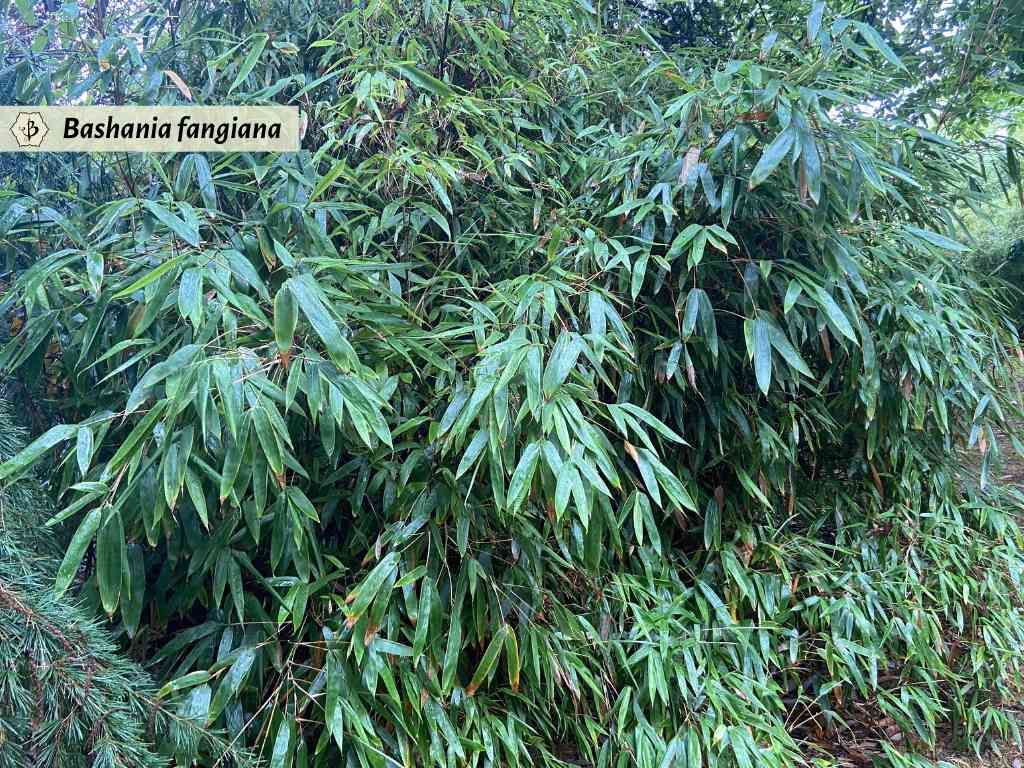
Closely related, there are just a few recognized species from the genus Bashania, native to Southern China and Vietnam. These are also slow-spreading runners that usually have slender culms and dense foliage.
Distribution of genus Yushania
One feature that could raise doubt about the classification of Yushania is its wide geographic distribution. Current systems group about 70 species that are native to places as far-flung as the Himalayan foothills, Southeast Asia, China, the Philippines, and sub-Saharan Africa.
These bamboo varieties grow in temperate and subtropical climates. What these regions share in common is their high altitude, which can reach up to 10,000 feet (3,000 meters). The name Yushania comes from Yu Shan, the tallest mountain in Taiwan.
Important species of Yushania
Depending on the source, you may find somewhere between 65 and 85 species of Yushania, occurring predominantly in the wilderness of southern China. There are a small handful of these that are of particular interest.
Yushania alpina
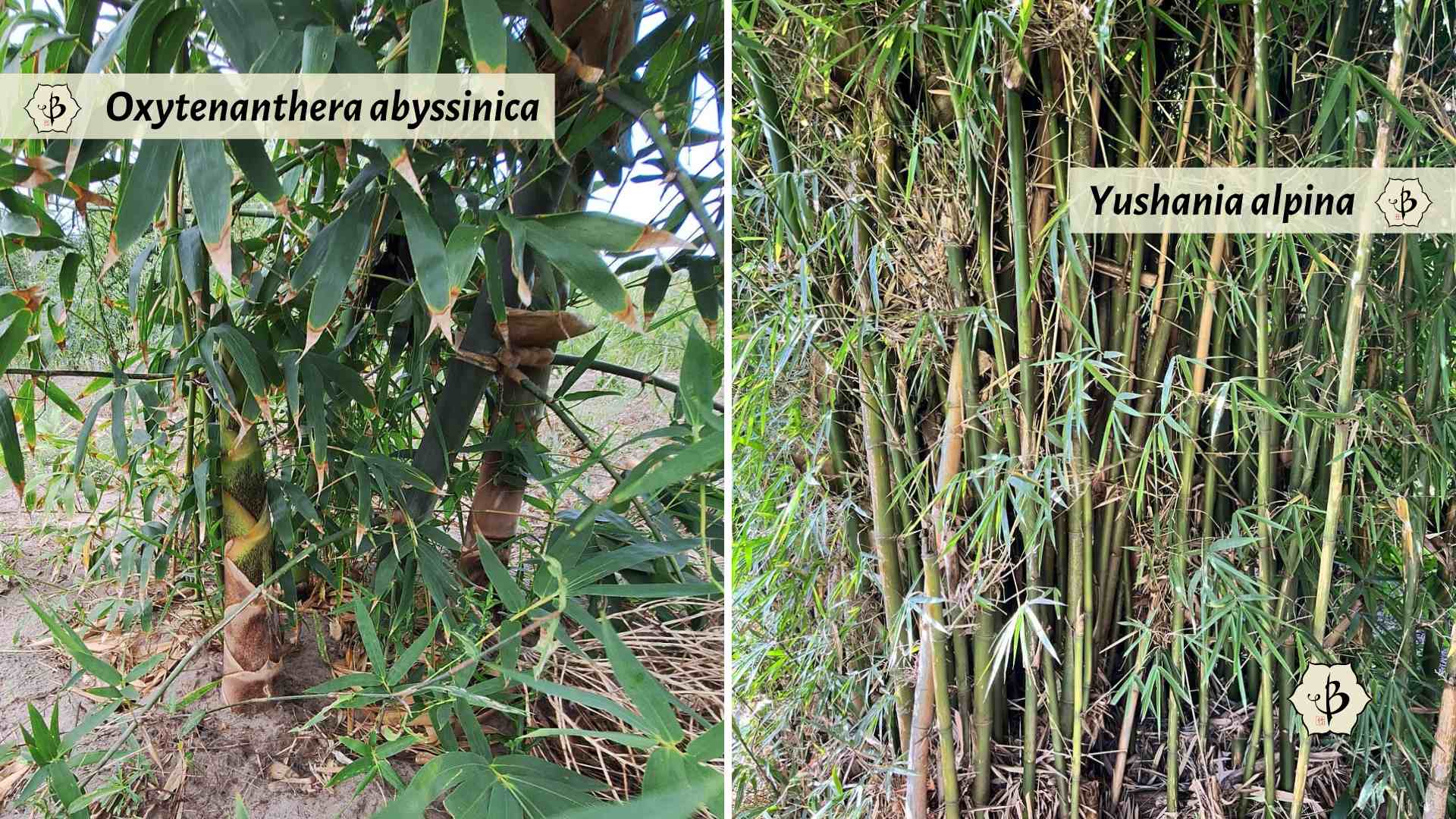
Sometimes listed as Oldeania alpina, this species is notable for being one of the few bamboo varieties native to Africa. Commonly referred to as African Highland Bamboo, it grows in many of the same regions as African Lowland Bamboo (Oxytenanthera abyssinica), but at higher altitudes and not as widespread. While Lowland Bamboo occurs in most of sub-Saharan Africa, Yushania alpina is more local to East Africa, namely Ethiopia, Kenya, Uganda, Tanzania, Zambia and Malawi.
One of the larger members of the genus, this variety has been known to grow up to 50 or 60 feet tall. With its short rhizomes, it is usually described as a clumper. But when it comes to running and clumping, the classification of Yushania is not perfectly clear.
Yushania anceps
This is probably the most popular ornamental species in the genus, better known as “Pitt White.” From its bushy, drooping appearance, the close affinity to the genus Fargesia is evident. But the rhizomes spread more aggressively. Rhizomes of this plant also run deeper, making it a good candidate for erosion control. Like most montane bamboo varieties, these prefer cooler climates with mild summers. They are cold-hardy to about 0º F.
Yushania elegans
Native to northeast India, Myanmar, and southern China, this species prefers subtropical conditions in the foothills of the Himalayas. The plant is moderately tall, up to 20 or 30 feet, with slender, graceful culms and abundant foliage.
Yushania maling
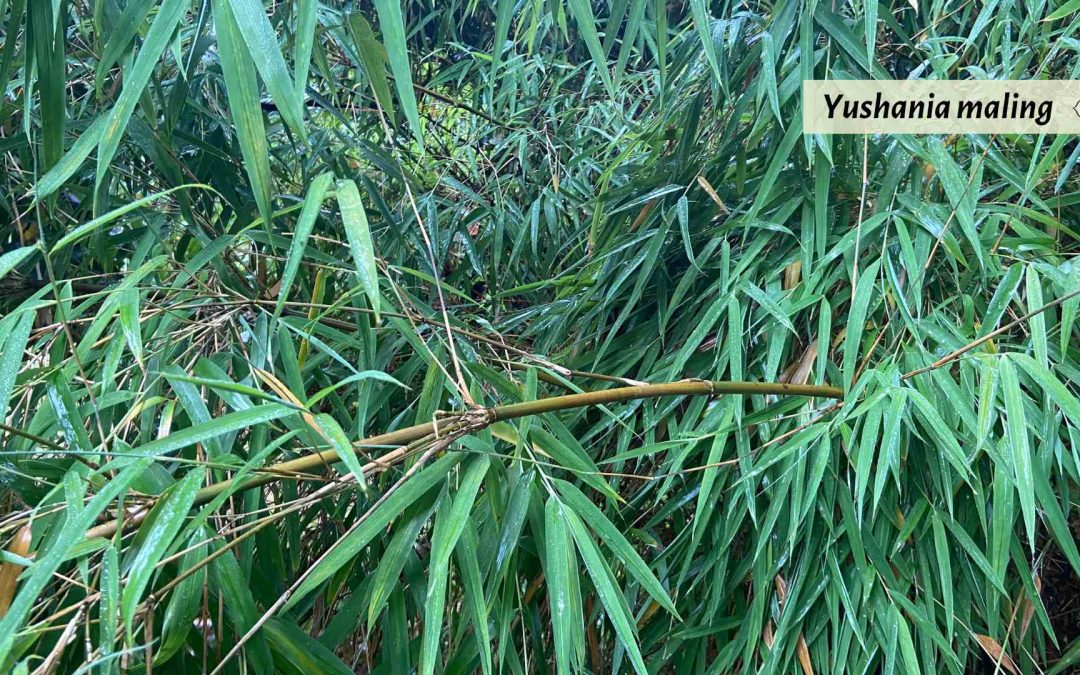
A rare variety, also native to northeastern India and Nepal, Y. maling has been introduced to the United Kingdom as an ornamental, where it does well in the cool climate. The rhizomes of this plant have long necks, making it behave more like a runner, although botanically more of a clumper. Culms are no more than one inch in diameter, and anywhere from 10 to 20 feet tall.
Related genera
The distinctions between Yushania and several closely related bamboo genera remain somewhat vague, reflecting the ongoing evolution of bamboo taxonomy. Genera such as Fargesia, Borinda, Himalayacalamus, Thamnocalamus, and Bashania share many characteristics, especially their montane habitats, slender culms, and relatively compact rhizome systems. Many species now classified as Yushania were formerly placed in Arundinaria, while others have shifted back and forth between neighboring genera as botanists refine their understanding through morphological studies and genetic analysis.
Among these relatives, Bashania is perhaps the closest comparison, particularly because of its longer-necked rhizomes and slowly spreading habit. Fargesia and Borinda tend to form tighter clumps and are generally more shade-tolerant, while Himalayacalamus often displays a similarly graceful, cascading form with delicate foliage. For bamboo enthusiasts and collectors, these genera occupy a fascinating middle ground between the tropical clumpers and the aggressive temperate runners, offering elegant ornamental varieties especially well-suited to cool, mountainous climates.
Further reading
To learn more about using and maintaining bamboo, take a look at some of the other articles.
FEATURE IMAGE: Yushania maling at Kew Gardens in London. Photo by Fred Hornaday.