Phyllostachys dulcis, commonly known as Sweet Shoot Bamboo, is a cold-hardy running bamboo prized for both its ornamental beauty and its excellent edible shoots. With graceful green culms, vigorous growth, and reliable winter hardiness, this Chinese species makes an attractive privacy screen while also producing some of the tastiest bamboo shoots for the kitchen.
This article is part of an extensive series about different species and cultivars of bamboo. To learn more, be sure to check out our Complete Guide to Growing Bamboo and our comprehensive Directory of Bamboo Species. You may also be interested in these important bamboo topics.
NOTE: This entry first appeared in January 2025, most recently updated in June 2026.
Quick facts about Phyllostachys dulcis
- Scientific name: Phyllostachys dulcis
- Common name: Sweet Shoot Bamboo
- Growth habit: Running bamboo
- Native range: China
- Climate: Temperate to warm temperate
- Cold hardiness: Approximately 0–5°F (-18 to -15°C)
- Height: 25–35 feet
- Culm diameter: 1–1.5 inches
- Light requirements: Full sun to partial shade
- Water needs: Moderate; benefits from regular irrigation during the growing season
- Soil preferences: Rich, loamy, well-drained soil
- Primary uses: Edible shoots, privacy screens, ornamental landscaping, specimen groves
- Special characteristics: Highly regarded edible shoots, upright growth habit, attractive light green culms, vigorous growth
- Maintenance notes: Requires rhizome containment in most gardens; benefits from annual compost applications and occasional thinning
Characteristics of Phyllostachys dulcis
Compared to other species of Phyllostachys, such as Black Bamboo and Golden Bamboo, P. dulcis is a less common variety. But like other members of the genus, it is easy to grow in a wide variety of climates. It can withstand freezing temperatures in the single digits Fahrenheit, while also tolerating hot summers. And the evergreen foliage looks fine all year round.
Keep in mind, this is a running bamboo, which means it has the potential to spread aggressively if it’s not properly contained. It’s not as invasive as some other species, but once it is established, after a few years, it will become difficult to eradicate.
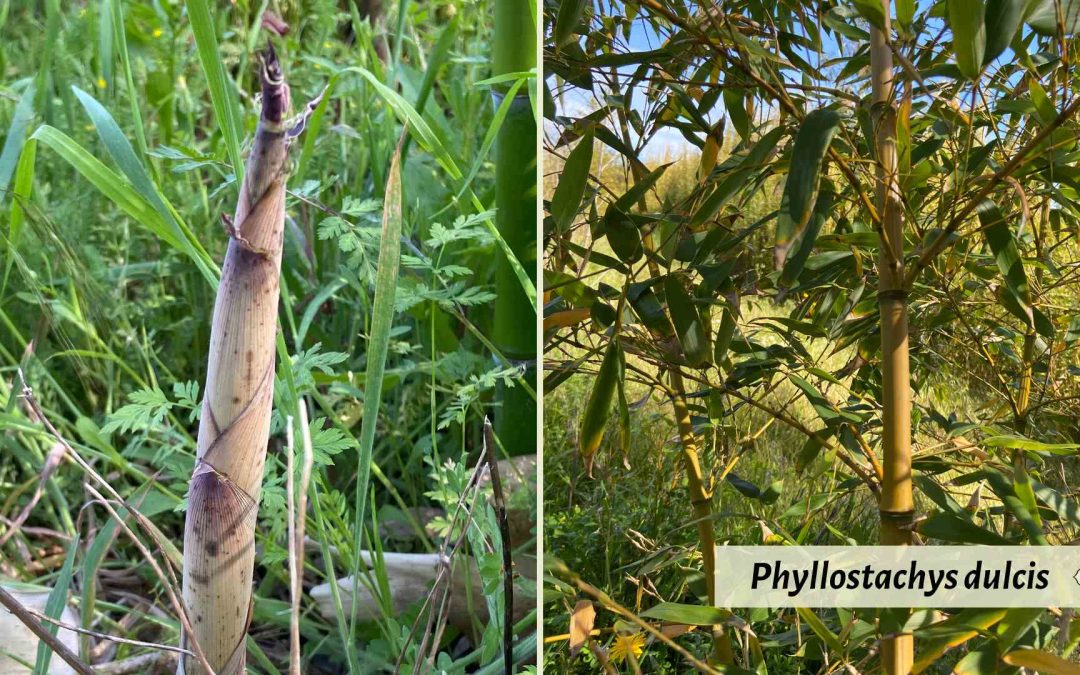
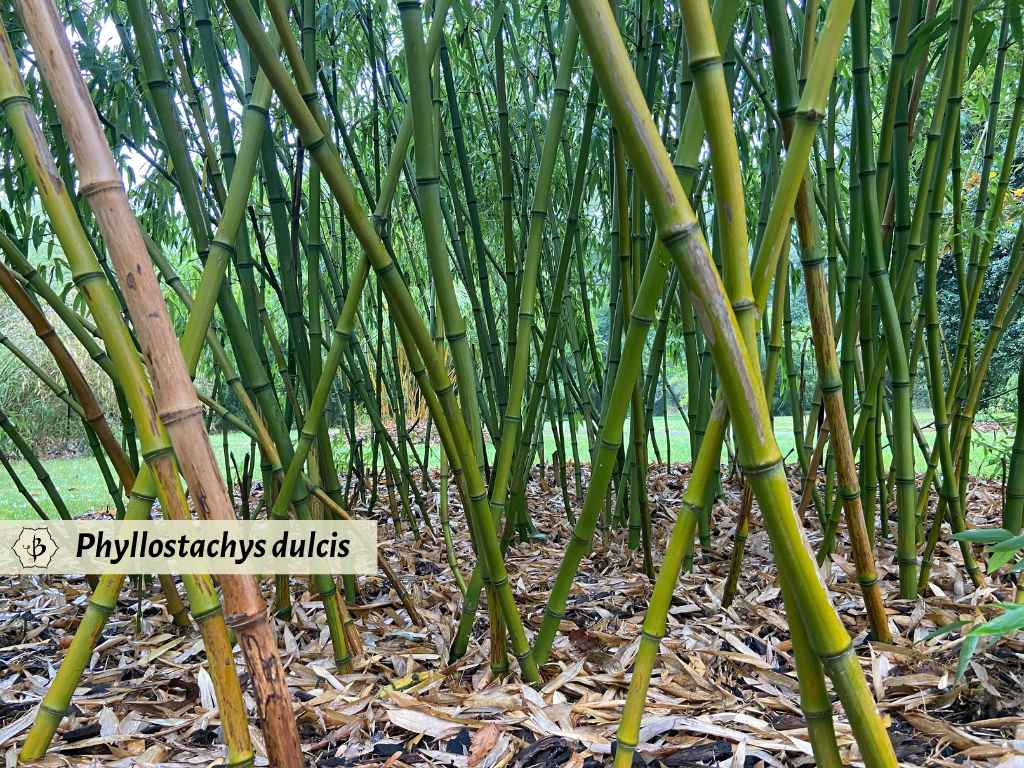
Bamboo comes in a huge range of sizes, from pencil-thin to gargantuan. Phyllostachys dulcis hits the Goldilocks zone, with beautiful light green culms that are about 1-1.5 inches in diameter. They can grow up to 30-35 feet in ideal conditions with loamy soil and ample irrigation. This is enough to provide a good privacy screen, but not a massive timber forest. Mostly elegant and upright, the poles can sometimes make zig-zags, which create an interesting effect in the garden.
Habitat
Native to China, Phyllostachys dulcis grows in regions with warm summers and cool winters. Like many temperate bamboos, it thrives in fertile soils with reliable moisture and has adapted well to cultivation in North America and Europe.
Phyllostachys dulcis: How sweet it is
The most prevalent association with this species is the edibility of its shoots. This feature may be somewhat overstated, however, since all varieties of Phyllostachys are safe to eat and very palatable.
As a general rule, it’s necessary to boil bamboo shoots for around 30 minutes before eating them to remove the natural toxins. But the level of naturally occurring cyanides can vary between species. Some bamboo can be eaten fresh without boiling, some need to boil considerably longer, and some are just too bitter for consumption.
Phyllostachys shoots are edible after 20-30 minutes of boiling. I like to change the water halfway through to cleanse it thoroughly. But there’s far more to the flavor than just the species. The growing conditions and soil quality can play a role, too. Probably the most important factor is when the bamboo is harvested. Younger shoots will be the sweetest, especially the white ones that haven’t broken through the surface to see the sunlight yet. As shoots mature and begin developing into culms, the texture becomes tougher and the flavor less desirable.
And be careful to harvest only the shoots, not the underground rhizomes that produce them.
With that in mind, it can be difficult to compare the flavors of bamboo, based strictly on the species. Furthermore, we seldom eat bamboo shoots plain. The seasoning and preparation are everything. Once the bamboo is simmered in a coconut curry sauce, you’ll have a hard time distinguishing the flavor of one species over another.
In any case, there’s a reason gardeners call it Sweet Shoot Bamboo. Whether you’re growing bamboo for privacy, ornamental beauty, or culinary adventures, Phyllostachys dulcis deserves a place on the short list.

Additional edible species
If you’re hungry for more varieties of edible bamboo in your diet, the following species are especially appetizing.
- Phyllostachys bambusoides: temperate timber bamboo
- Phyllostachys edulis (Moso): temperate timber bamboo
- Bambusa oldhamii: subtropical timber bamboo
- Dendrocalamus asper: giant, tropical bamboo
Further reading
If you found this article useful, please let us know in the comments below, and feel free to share and recommend it to your friends. We appreciate your support. You might also find these articles helpful.
FEATURE IMAGE: Fresh shoot and branching characteristics in a young grove of Phyllostachys dulcis. Photos by Fred Hornaday.