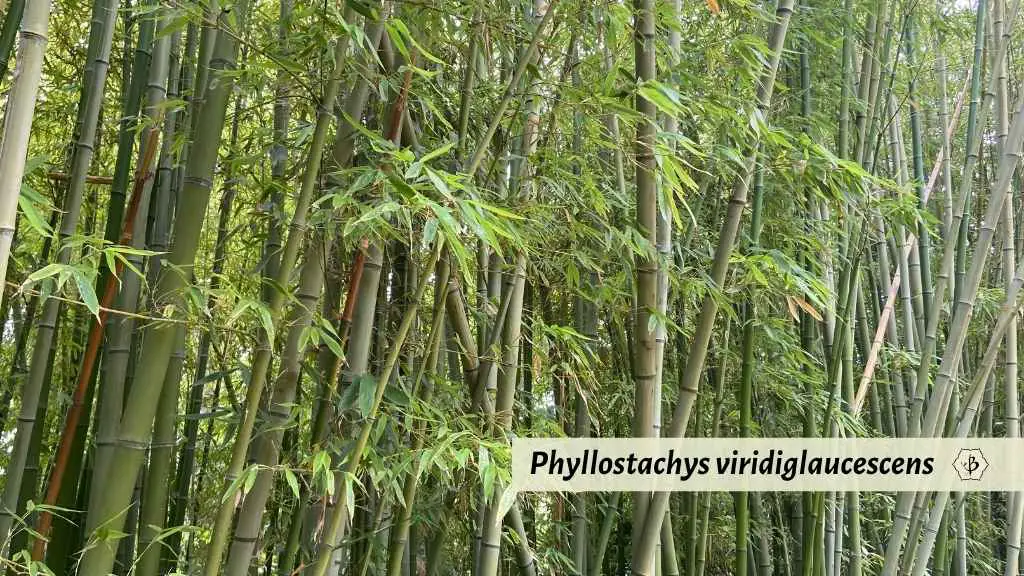
Outside the tropical climes of Thailand or Brazil, Phyllostachys is the bamboo genus we know best. This category of cold-hardy, running bamboo includes species like Moso, perhaps the most economically important bamboo variety on earth, as well as a host of smaller, ornamental bamboos. Among the lesser-known but especially attractive members of the genus is Phyllostachys viridiglaucescens.
Also known as Green Wax Bamboo or Green Glaucous Bamboo, this Chinese species combines lush foliage, elegant upright culms, and unusually thick-walled poles. Growing 25 to 40 feet tall under favorable conditions, Phyllostachys viridiglaucescens makes an excellent ornamental screen while also producing strong canes suitable for crafts and light construction.
This article is part of an extensive series on different species of bamboo. To learn more, head over to our Complete Guide to Growing Bamboo and our comprehensive Directory of Bamboo Species. You may also be interested in these other ornamental species for temperate climates.
- Black Bamboo: Phyllostachys nigra and others
- Chimonobambusa quadrangularis: Square Bamboo
- Pseudosasa amabilis: Tonkin Bamboo
NOTE: This entry was first published in November 2022 and last updated in May 2026.
Quick Facts: Phyllostachys viridiglaucescens
- Common names: Green Wax Bamboo, Green Glaucous Bamboo
- Scientific name: Phyllostachys viridiglaucescens
- Growth habit: Running (monopodial) bamboo
- Native range: China
- Climate: Temperate to subtropical
- Cold hardiness: Approximately -5°F (-20°C)
- Height: 25–40 feet
- Culm diameter: 2–3 inches
- Culm characteristics: Thick-walled, often nearly solid, upright, green aging to gray-green
- Sun requirements: Full sun to light shade
- Soil preferences: Moist, well-drained, slightly acidic
- Primary uses: Ornamental screening, furniture, crafts, light construction
- Special features: Dense foliage, prominent nodes, strong poles, attractive coloration
Characteristics of Phyllostachys viridiglaucescens
Growth Habit
Like all members of the genus Phyllostachys, Green Waxy Bamboo is a monopodial species with a running growth habit, meaning that it spreads through underground rhizomes. So some form of containment is strongly advised. Fortunately, this is not hyper-aggressive like some other bamboo varieties and is fairly manageable with regular maintenance.
Size and Appearance
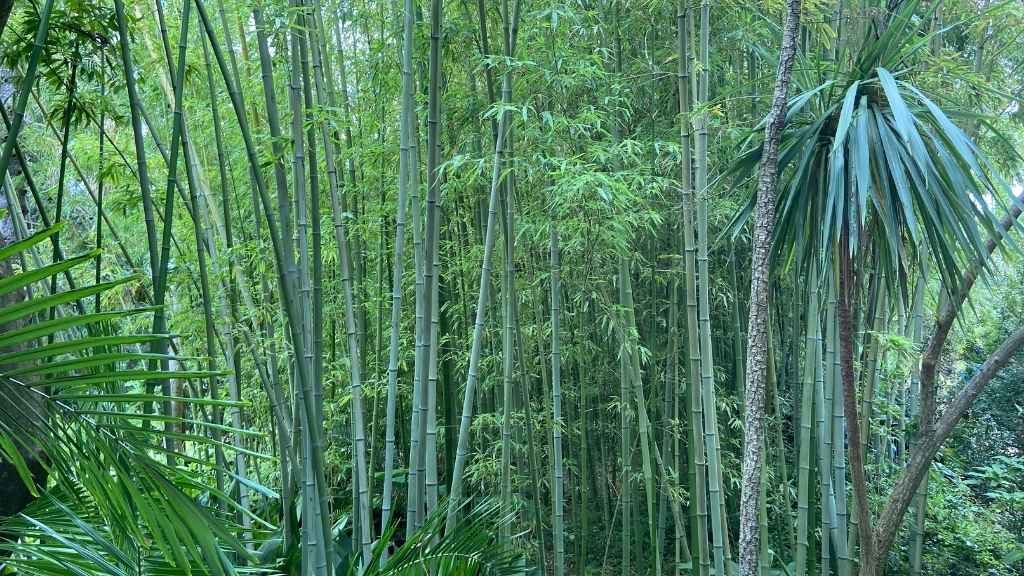
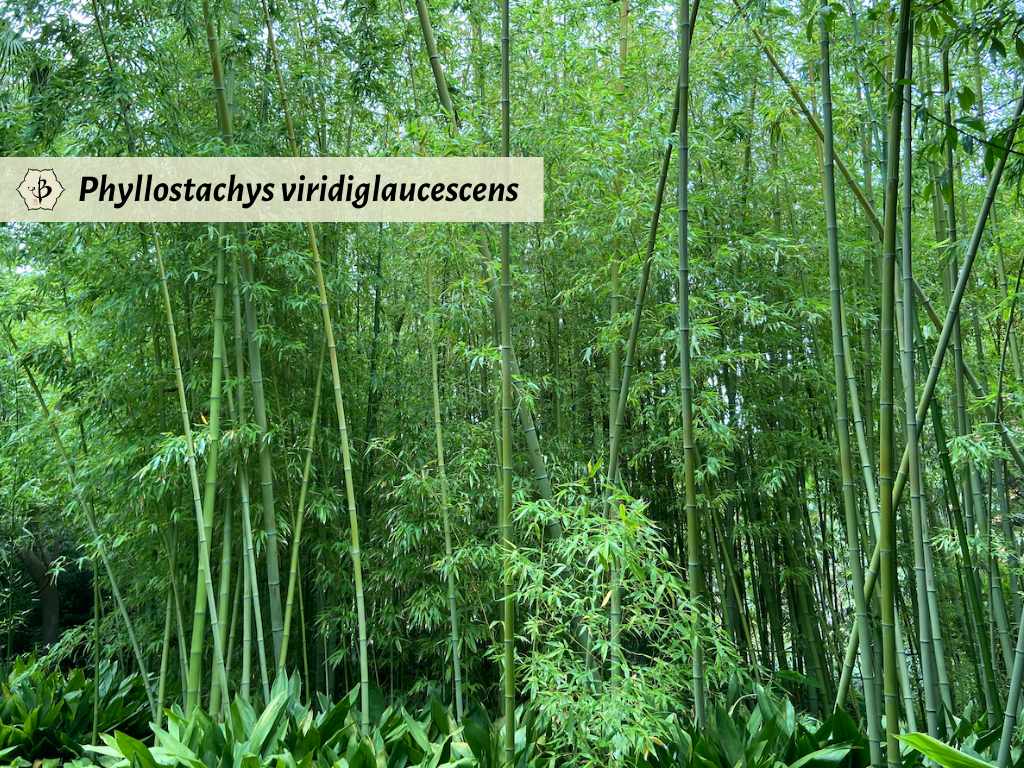
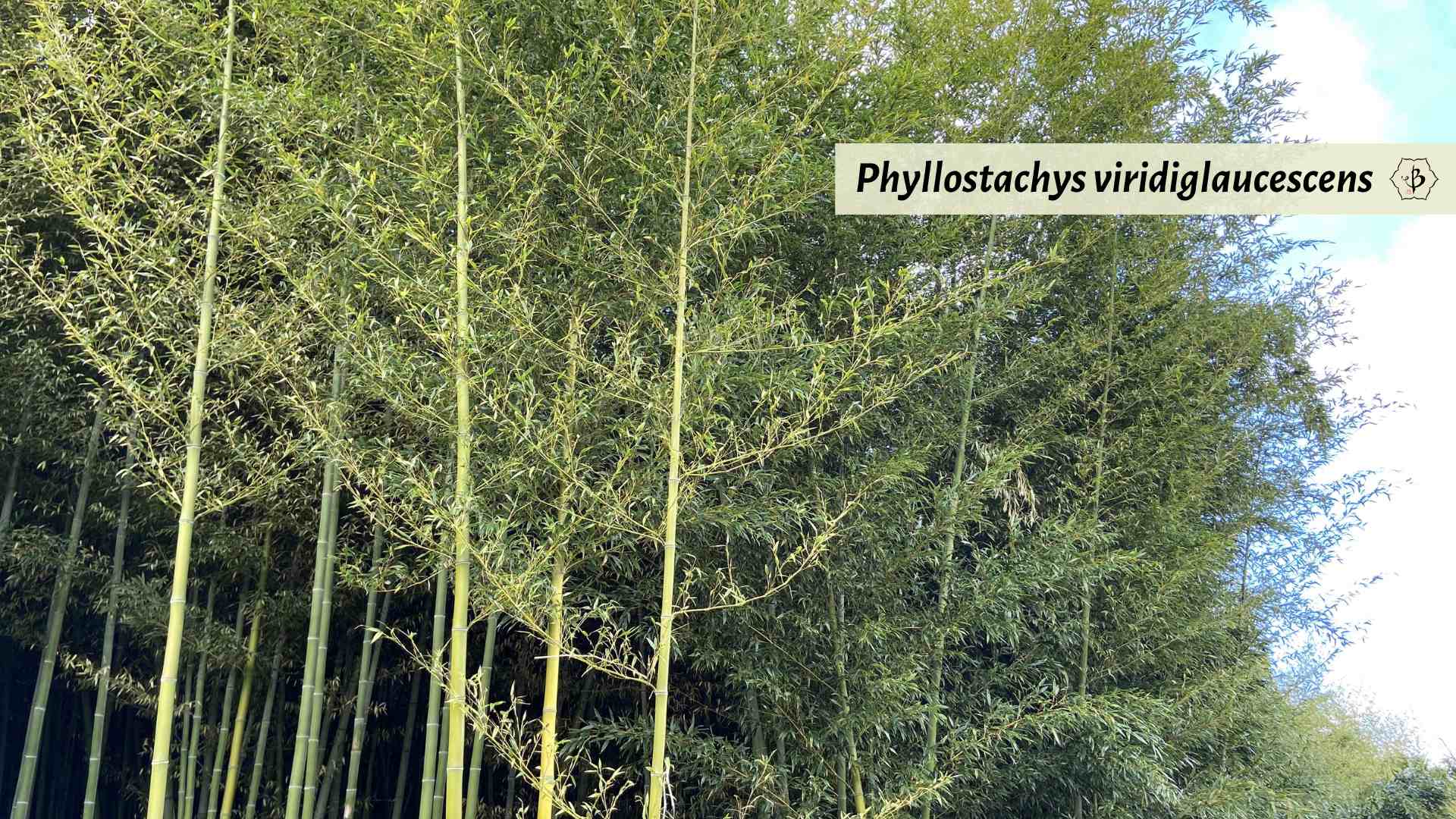
Not quite timber bamboo, Phyllostachys viridiglaucescens towers over 20 feet tall, closer to 40 under ideal circumstances. Culms are very straight and upright, up to 2 or 3 inches in diameter, and are nearly solid rather than hollow. The poles generally grow pretty close together, forming a dense thicket. The foliage is also fairly thick, making for an effective privacy screen.
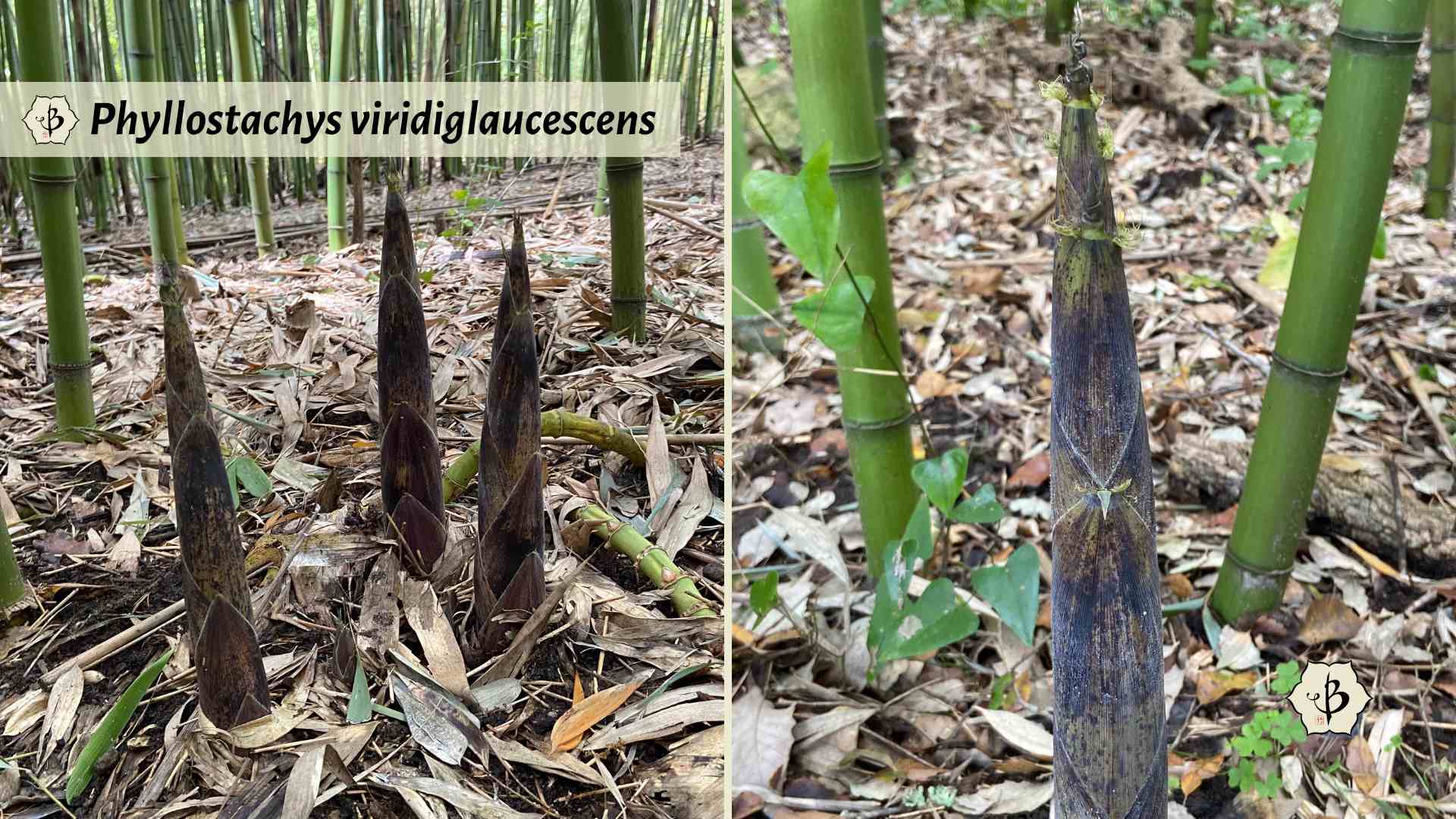
This species is probably most distinguishable for its lush green color. Not only are the leaves bright green, but the poles are also vibrant and verdant. Over time, the radiant green fades to a more grayish color, but still very attractive. The bottom halves of the culms usually have far fewer leaves and branches, leaving the elegant poles clearly visible. Upon closer inspection, the nodes of the culms are visually pronounced, lending even greater character.
Growing Conditions
While the rich greenery of this bamboo species evokes a sense of tropical splendor, Phyllostachys viridiglaucescens is actually a temperate plant that can tolerate winter temperatures down to around 5º below zero Fahrenheit. At the same time, it’s also heat-tolerant, so it’s quite adaptable.
Phyllostachys viridiglaucescens is more commonly grown in Europe than in the US for some reason. It performs especially well in mild temperate climates with moderate humidity and reliable rainfall. It requires full sun or minimal shade. The soil should be moist but well-drained, and a slightly acidic pH is ideal.
Withholding water and keeping the plant a bit drier is usually a good way to make the culm walls thicker or nearly solid.
Uses of Phyllostachys viridiglaucescens
Although it’s not at the top of most bamboo growers’ lists, this is a very beautiful and versatile species. As an ornamental, this tall, evergreen grass will keep the garden looking lively throughout the year. It looks good alongside other tall trees, both conifers and deciduous. And it’s equally compatible in a subtropical setting, among palm trees, oleanders and succulents.
The sturdy poles of Phyllostachys viridiglaucescens are excellent for crafts and building. They are not as big as Moso or Henon, but the culms are nearly solid, with unusually thick walls that give the poles impressive strength for their size while also reducing splitting during drying and fabrication. The species is especially valuable to furniture makers who prefer medium-sized bamboo with even consistency and reliable strength.
If you’re growing or making anything from Green Glaucous Bamboo, please send us a photo. We’d love to hear from you.
Learn more
I hope you found this article on Phyllostachys viridiglaucescens interesting and enjoyable. Perhaps you will decide to plant some in your yard and maybe use the poles to build a treehouse! To learn more about the wonders bamboo, check out some of these popular articles.
FEATURE IMAGE: Phyllostachys viridiglaucescens grove in northeast Spain near the Mediterranean. Photo by Fred Hornaday.