
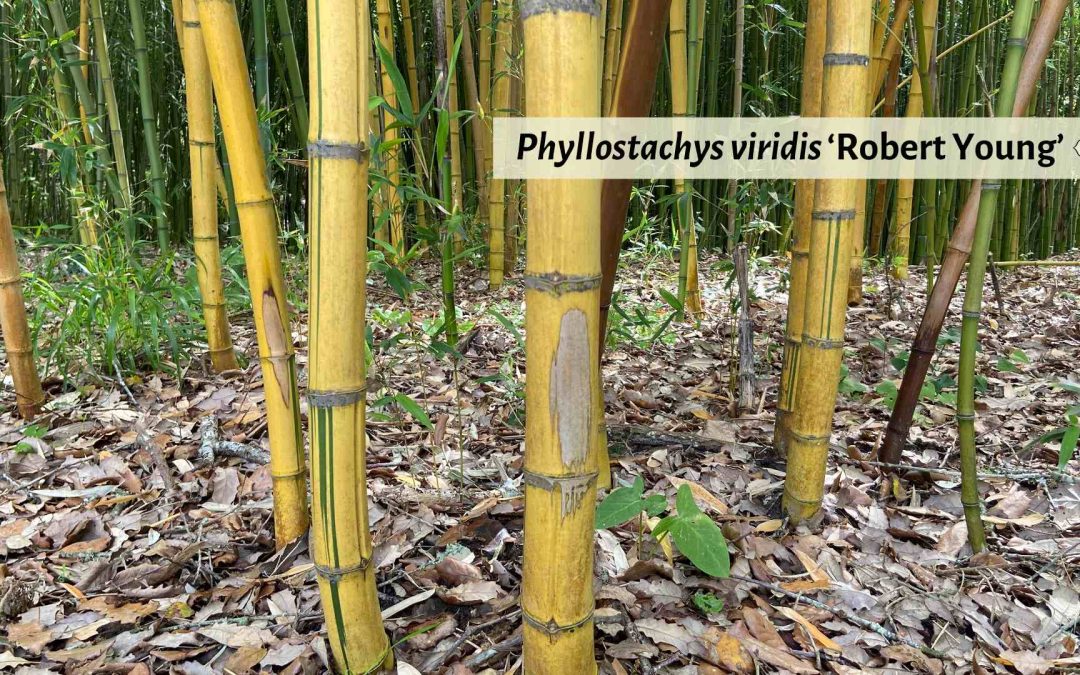
There’s a lot to love about Phyllostachys viridis ‘Robert Young’, also known as Phyllostachys viridis ‘Sulphurea’ or Golden Chinese Bamboo. It’s the sort of bamboo that satisfies a long list of requirements. Robert Young grows well in cold and temperate climates, withstanding temperatures well below freezing, and even a few degrees below zero on the Fahrenheit scale. It’s fairly fast-growing, running bamboo, but doesn’t have the overly aggressive growth habit you’ll find with many other varieties of Phyllostachys. Its size and colorful stripes make this one of the most attractive bamboo species available.
This post is part of an ongoing series of articles that describe different species of bamboo. To learn more, head over to our Complete Guide to Growing Bamboo and our comprehensive Directory of Bamboo Species.
You can explore other cold-hardy bamboo species here:
NOTE: This article first appeared in June 2024, most recently updated in May 2026.
Quick Facts about Phyllostachys viridis
- Scientific name: Phyllostachys viridis
- Common names: Robert Young Bamboo, Golden Chinese Bamboo, Sulphurea Bamboo
- Growth habit: Running bamboo
- Native origin: China
- Climate: Temperate
- Cold hardiness: Approximately -5°F to 0°F (-20°C to -18°C)
- Height: 40–50 feet
- Culm diameter: 3 inches or more
- Culm color: Bright yellow with vivid green stripes
- Light requirements: Full sun to partial shade
- Water needs: Moderate; prefers moist, well-drained soil
- Growth rate: Fast-growing
- Primary uses: Ornamental landscaping, privacy screens, bamboo groves, crafts, furniture
- Special characteristics: Striking striped culms, exposed lower poles, elegant upright growth
- Maintenance notes: Less aggressive than many running bamboos, but rhizome containment is still recommended
Characteristics of ‘Robert Young’ bamboo
Size and Growth Habit
Reaching an impressive size of 40-50 feet in height and about 3 inches or more in diameter, most would consider this a timber bamboo species. But it doesn’t reach the same size and stature as other temperate giants like Moso, Madake, or Vivax. Furthermore, it’s much easier to grow and quicker to establish than Moso, but far less intrusive than creeping varieties like P. aurea or P. bissetii. Robert Young can stay in a large pot, but it’s far more impressive when it’s given some space to stretch out.
Color and Appearance
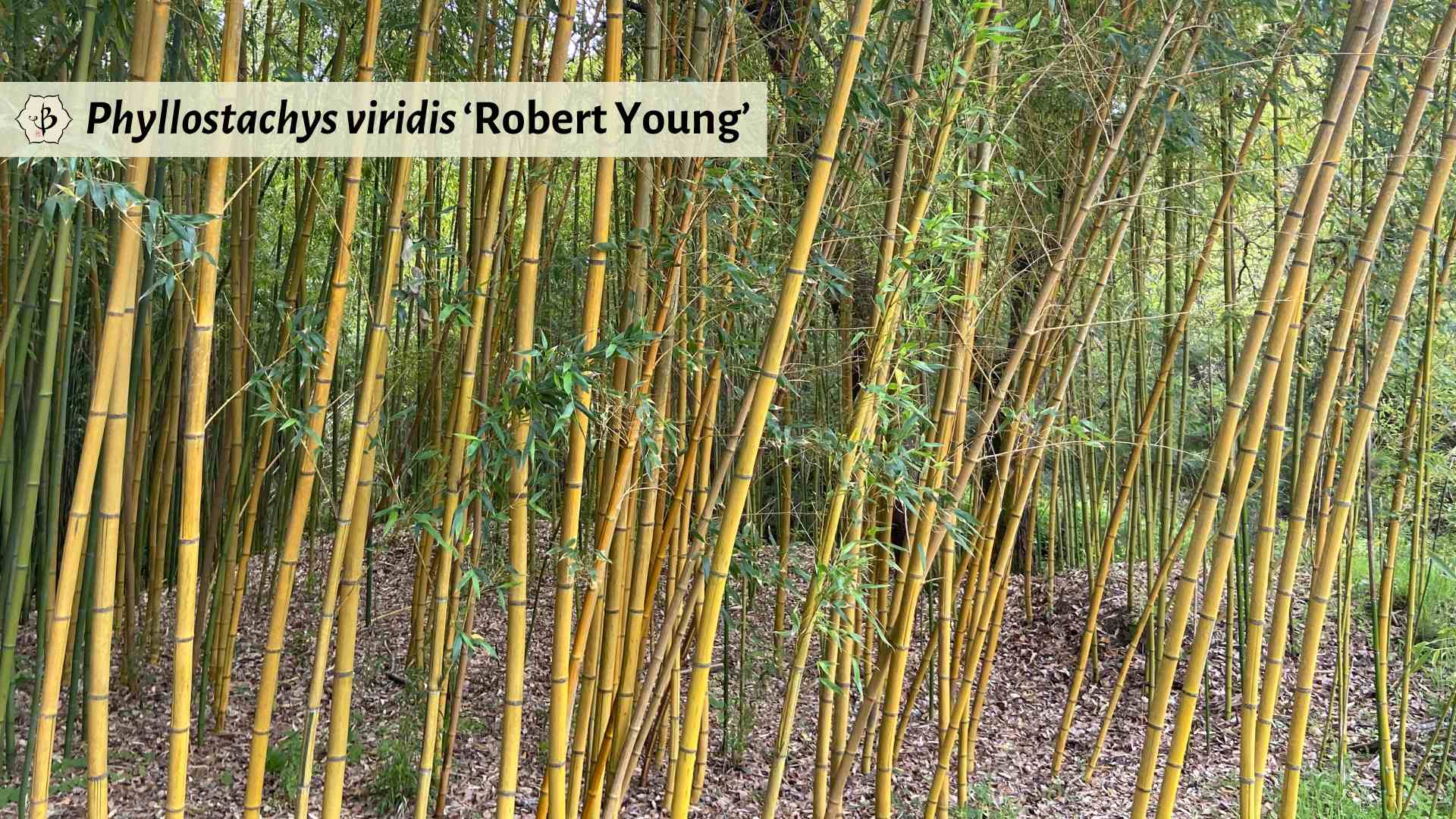
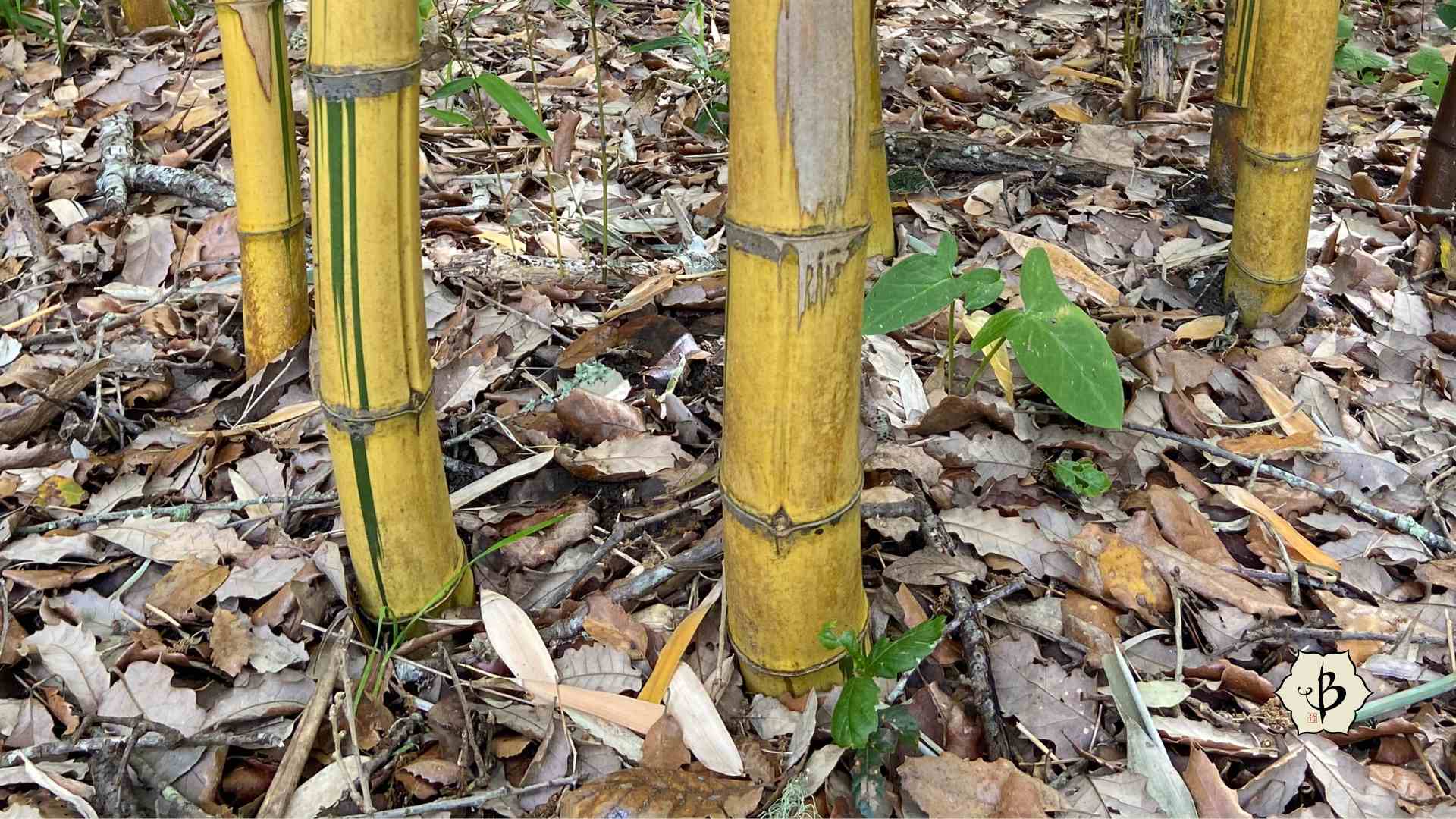
The most distinguishing characteristic of this remarkable bamboo is its vibrant color. Buttery yellow culms have vivid green stripes that stand out in any garden. The rich shade of yellow has earned this cultivar the alternate name of ‘Sulphurea’. Whether you’re creating a privacy hedge, planting a forest, or just looking for some contrasting colors against the other greenery of your landscape, this beautiful bamboo fits the bill.
Unlike many bamboo species, the branching is minimal until you get about 5 or 10 feet off the ground. This tends to produce a more pleasing and tidy appearance. Moreover, it leaves the culms exposed, showing off more of those stunning colors.
Varieties of Phyllostachys viridis
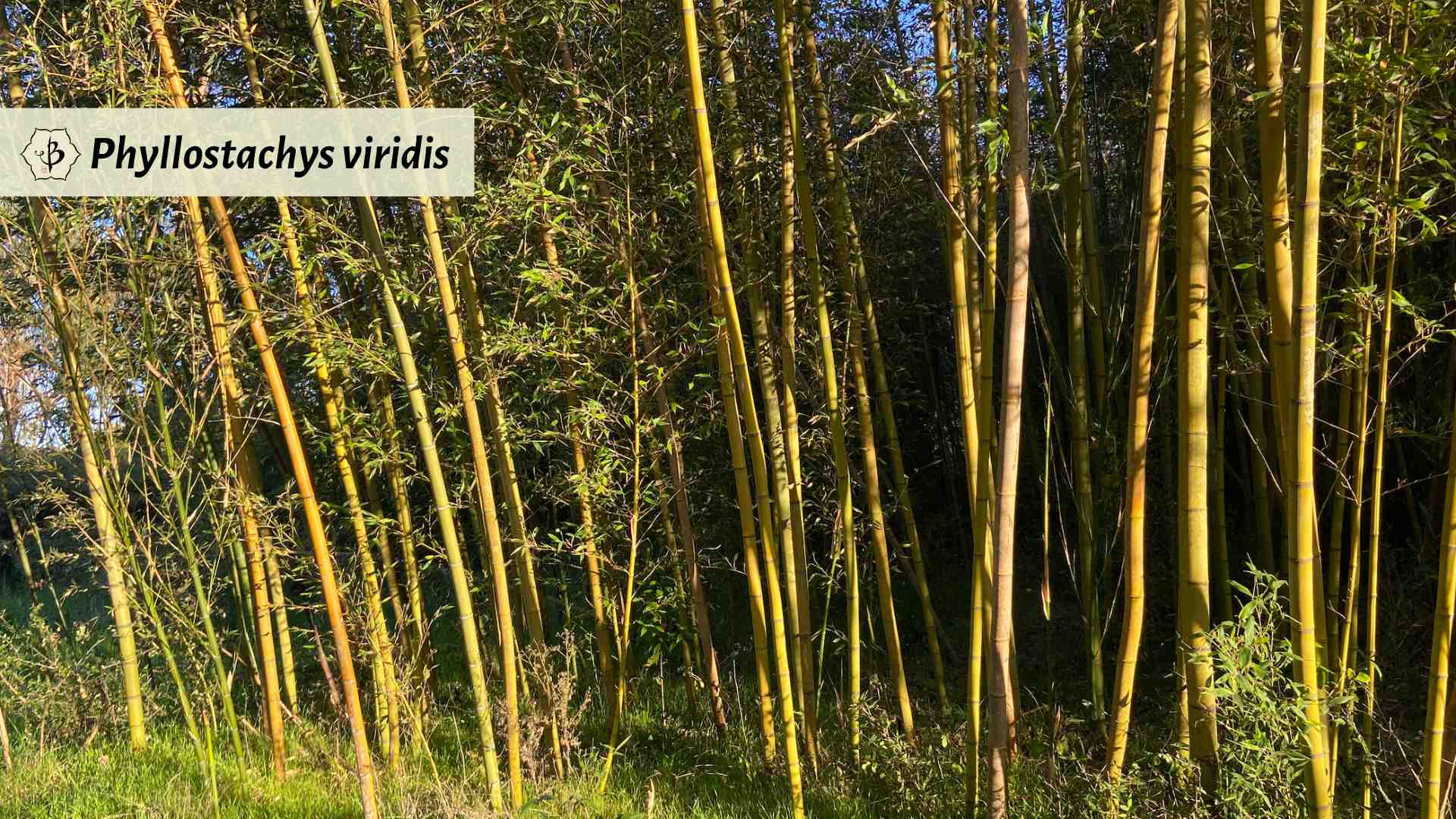
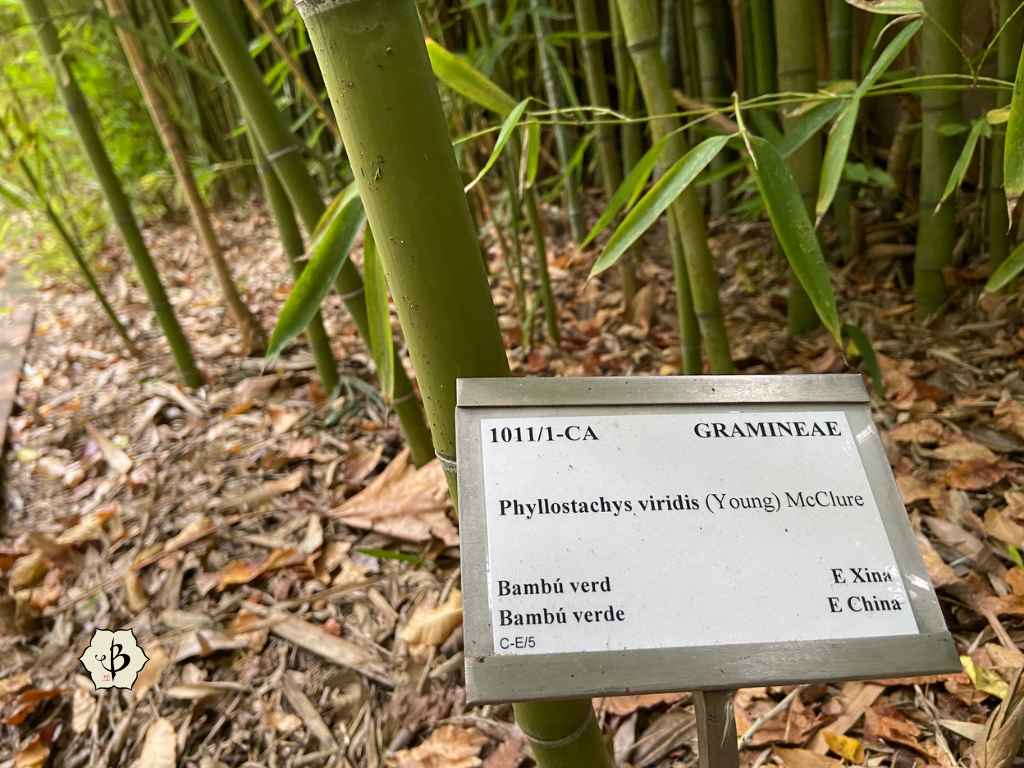
Robert Young, also called Sulphurea, is a cultivar of the species of Phyllostachys viridis. But the original species is less common. Lacking the striking variegation of Robert Young, this is still a good bamboo for many purposes, as an ornamental and for crafts.
Phyllostachys viridis var. ‘mitis’ is another subspecies to be aware of. Similar in size and growth habit, it has light-green culms without stripes. The towering poles often bend, refusing to grow straight, which creates visual interest but can frustrate the eco-friendly carpenter.
Uses for Phyllostachys viridis
This is an excellent, beautiful bamboo variety for ornamental purposes, bringing color to the garden or providing a privacy screen. Native to China, it’s especially adaptable for the temperate climates of North America and Europe. The culms aren’t huge, but they are a good size and can be used for crafts or furniture making. Once dried, the stripes will not be visible. The shoots, like most varieties of Phyllostachys, are edible and can be prepared in numerous ways.
Learn more
Learn more about the wonderful world of bamboo gardening.
- 10 best bamboo species for your garden
- Cold-hardy timber bamboo
- Best bamboo species for farming
- Striped bamboo
FEATURE IMAGE: A delightful grove of Phyllostachys viridis ‘Robert Young’ in Portugal. Photo by Fred Hornaday.










So if my Robert Young was pirchased as a 2 Gal. pot and been in the ground for 7 yrs , how tall or thick should I be today if my care was as recommended ?
Hey Robert. That depends on your climate, soil, and other factors, but the plant should be fully mature at this age, and in optimal conditions could be producing culms that will get 3.5 inches in diameter or so, 25-35 feet tall.