
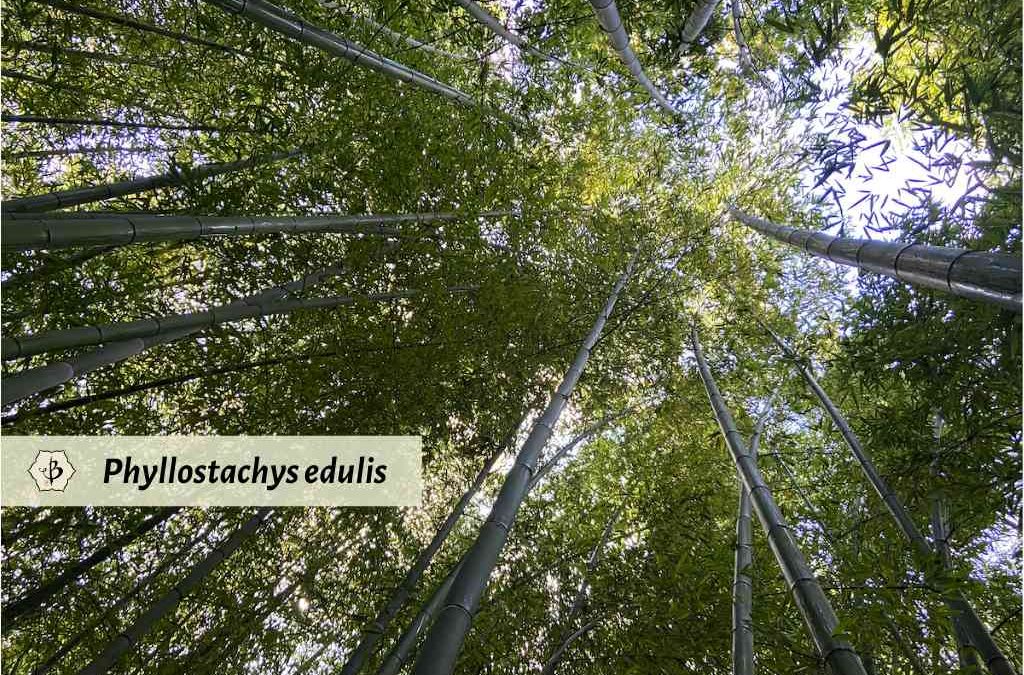
Bamboo has many amazing characteristics. And the woody grass has a reputation for being the fastest-growing plant on earth. That reputation is well-deserved because some varieties of bamboo can grow more than a meter a day, under ideal circumstances.
Bamboo is the fastest-growing land plant in the world. (Giant kelp can reportedly grow faster.) Under ideal conditions, certain species can grow more than 36 inches (90 cm) in a single day. Most bamboo grows far more slowly than this, however, and growth rates vary greatly depending on species, climate, soil conditions, and plant maturity.
This is part of a much larger series about the growth care and maintenance of bamboo. For a more in-depth study, check out our Complete Guide to Growing Bamboo.
NOTE: This article first appeared in June 2019, most recently updated in June 2026.
How fast does bamboo grow?
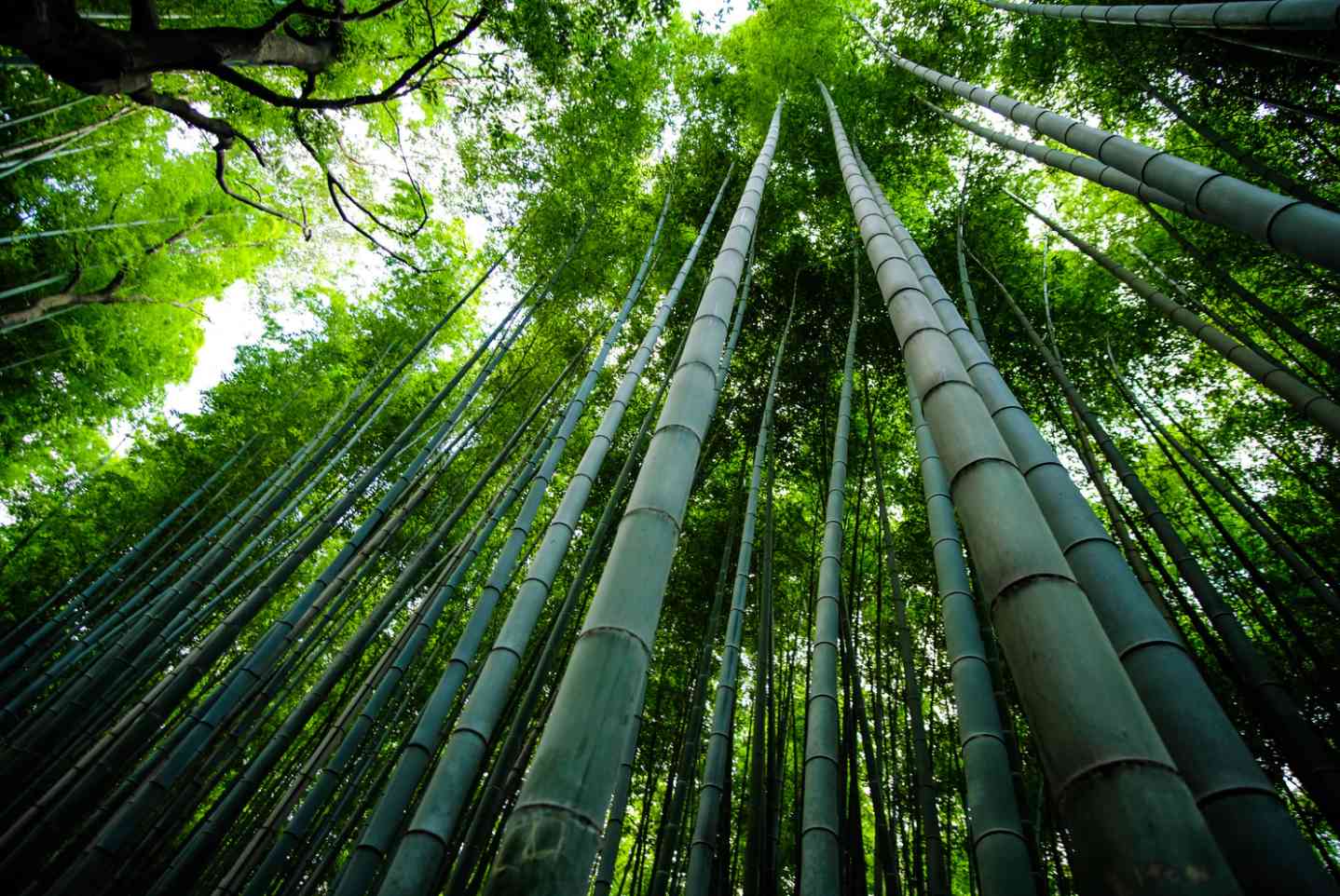
According to the Guinness Book of World Records, bamboo is actually the fastest-growing plant on earth. Although Guinness does not identify a particular species, they report a growth rate of 35 inches a day. Other sources claim that bamboo can grow more than a meter (39.4 inches) in a day.
At 35 to 40 inches a day, bamboo is indeed the fastest-growing plant on earth. But there are a few things you need to understand about bamboo and its growth habit.
First of all, this rate of growth is only possible with certain varieties of bamboo. As there are more than 1,500 distinct varieties of bamboo, and some dwarf bamboos only get a few inches tall, while giant timber bamboos can reach more than 100 feet in height. Of course, the timber bamboo grows much faster, but there are many factors that come into play.
Phyllostachys, a genus of running bamboo from Southern China, includes some of the fastest-growing species. Moso Bamboo (Phyllostachys edulis) is considered one of the largest and most vigorous varieties. Phyllostachys vivax is another impressive timber bamboo.
If the bamboo is fully mature, at least four or five years old, it will put up maximum-sized shoots. For a few months, these monstrous culms will skyrocket upwards until they reach their full height. The culm diameter will not get any larger after this. During the rest of the year, the bamboo may continue to bush out with more leaves and branches. But the individual bamboo culms will achieve their maximum height and girth within the short growing season.
Guadua is a tropical genus from Central and South America, often called the world’s strongest bamboo. It grows incredibly fast, often getting up to 5 or 6 inches in diameter. Then there’s Dendrocalamus, from India and Southeast Asia, which is also incredibly large, strong, and fast-growing.
Finally, the growing conditions are critical. Moso Bamboo, for example, is considered the fastest-growing species of temperate bamboo. Although it’s native to the subtropical areas of Southern China, Moso can grow very well in temperate climates. But in those cooler regions, it will never grow as fast and tall as it does in the heat of the subtropics.
Moreover, bamboo does not grow this fast on a regular, consistent basis. During the growing season, which is generally in the spring—although some tropical climates get two growth seasons a year—the bamboo puts out fresh shoots.

Why bamboo grows so fast
Bamboo’s extraordinary growth rate comes down to its unique biology. Unlike trees, which must continually build new wood, bark, and branches as they grow taller, much of bamboo’s heavy lifting takes place underground. Before a new shoot ever breaks the surface, an extensive rhizome network has already spent months or years accumulating energy and nutrients.
When the growing season arrives, the bamboo plant is not starting from scratch. The rhizomes send up new shoots that are essentially pre-programmed to reach a specific height and diameter. Drawing on energy reserves stored underground, these shoots can expand at astonishing speeds, sometimes growing several inches or multiple feet per day under ideal conditions.
Another factor is the structure of the bamboo culm itself. Bamboo stems are hollow and segmented by nodes, making them extremely strong while requiring far less material than a solid tree trunk of similar height. Because the plant does not need to produce dense wood throughout the entire stem, it can devote more energy to rapid vertical growth.
Climate also plays an important role. Warm temperatures, abundant rainfall, fertile soil, and long daylight hours all contribute to faster growth. Tropical species such as Guadua and Dendrocalamus thrive in year-round warmth and can reach impressive dimensions in a remarkably short period. Temperate species such as Moso bamboo and other members of the genus Phyllostachys may experience colder winters, but they still produce dramatic bursts of growth during spring shooting season.
In essence, bamboo grows so fast because it has evolved a highly efficient strategy: build and store energy underground first, then deploy that energy in a brief but spectacular period of rapid growth.
Bamboo growth vs tree growth
One of the most common misconceptions about bamboo is that it grows like a tree, only faster. In reality, bamboo and trees follow completely different growth patterns.
A tree increases its height gradually over many years. Each growing season adds a little more wood to the trunk, a few more branches, and some additional height at the crown. A young oak, pine, or maple may require several decades before reaching maturity.
Bamboo works differently. Every new bamboo shoot emerges from the ground with its final diameter already determined. Over the course of a few months, that shoot stretches upward until it reaches its maximum height. Once the culm stops growing vertically, it will never become taller or thicker.
Instead, the culm matures by hardening its fibers and producing branches and leaves. Future growth comes not from enlarging existing culms but from producing entirely new ones. Each year, the rhizome system sends up another generation of shoots, often larger than the previous generation as the grove becomes more established.
This growth strategy helps explain why bamboo can outperform trees in terms of biomass production. A mature bamboo grove does not need to invest decades building individual trunks. Rather, it continually replaces older culms with new ones, maintaining a cycle of rapid renewal.
The result is a plant that behaves more like a perennial grass than a forest tree. While a timber tree may require twenty to fifty years before it can be harvested, many bamboo species produce harvestable poles within five to seven years and continue generating new culms annually without the need for replanting.
For this reason, bamboo is often considered one of the most productive renewable resources on earth. And it doesn’t merely grow faster than trees, it grows according to an entirely different set of rules.
How fast does bamboo spread?
It’s essential to understand that growth rate and spreading rate are not the same thing, although people often confuse the two. A 60-foot bamboo like Bambusa oldhamii, a clumping species, actually spreads slowly. But a 2-foot dward bamboo like Pleioblastus fortunei bamboo can spread very aggressively.
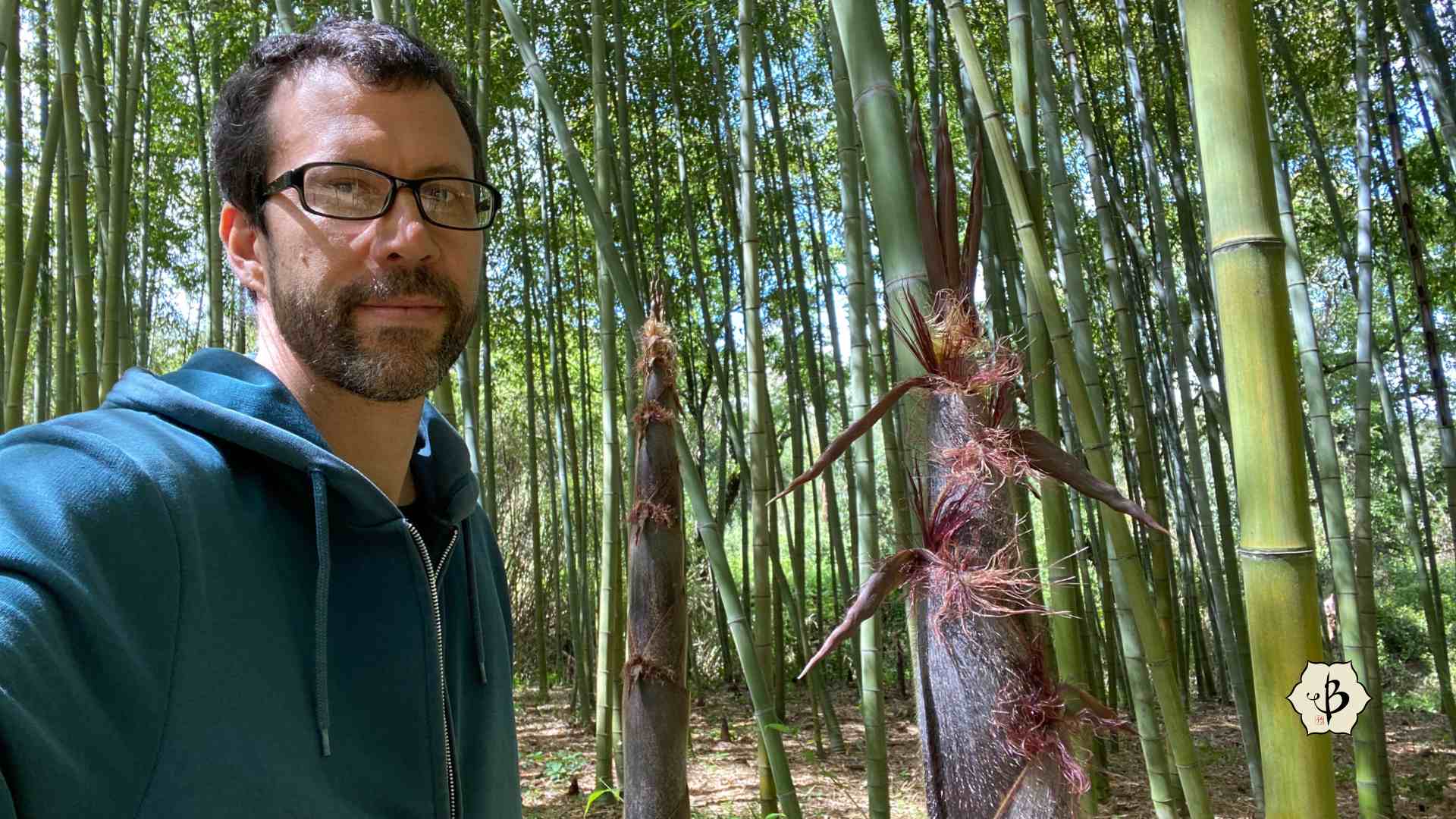
Temperate, running bamboos like Phyllostachys are noteworthy for their aggressive, monopodial rhizomes. Thankfully, they won’t spread at a rate of 2-3 feet a day, but their rhizomatous expansion rate is formidable and something to be aware of. The rhizome network of a healthy running bamboo can easily spread 4 or 5 feet in one year.
As of yet, the Guinness Book of World Records has not taken the time to measure the speed at which bamboo’s underground rhizome network can spread. And again, this pace depends greatly on the variety of bamboo and its growing conditions.
Phyllostachys, as mentioned above, is one of the fastest-spreading genera of running bamboo. P. aurea, P. bissetii and P. aureosulcata are some of the most invasive species to watch out for. You might not notice in the first season or two, but once established, they can really spread out of control. (Remember the famous proverb: “The first year it sleeps, the second year it creeps, the third year it leaps.”)
Other varieties of bamboo might be much smaller in stature. But don’t be fooled, their running roots can be incredibly vigorous. Many species of Pleioblastus, Sasa, and Sasaella fall into this category. In a warm climate with good sun exposure and an adequate water supply, their footprints can easily spread several feet a year. In a shadier spot or a cold climate, they won’t spread as fast. But you’ll still need to keep an eye on them.
Check out our articles on cold-hardy bamboo and bamboo containment to learn more.
Bamboo height
With more than a thousand varieties, it’s impossible to make a generalization about how tall bamboo will get. Moso Bamboo, again, is one of the biggest, easily exceeding 100 feet in height.
Another remarkable species is Guadua angustifolia, native to Colombia and Central America, one of several varieties referred to as Giant Bamboo. This New World specimen will commonly grow 25-35 meters high, or 80-115 feet.
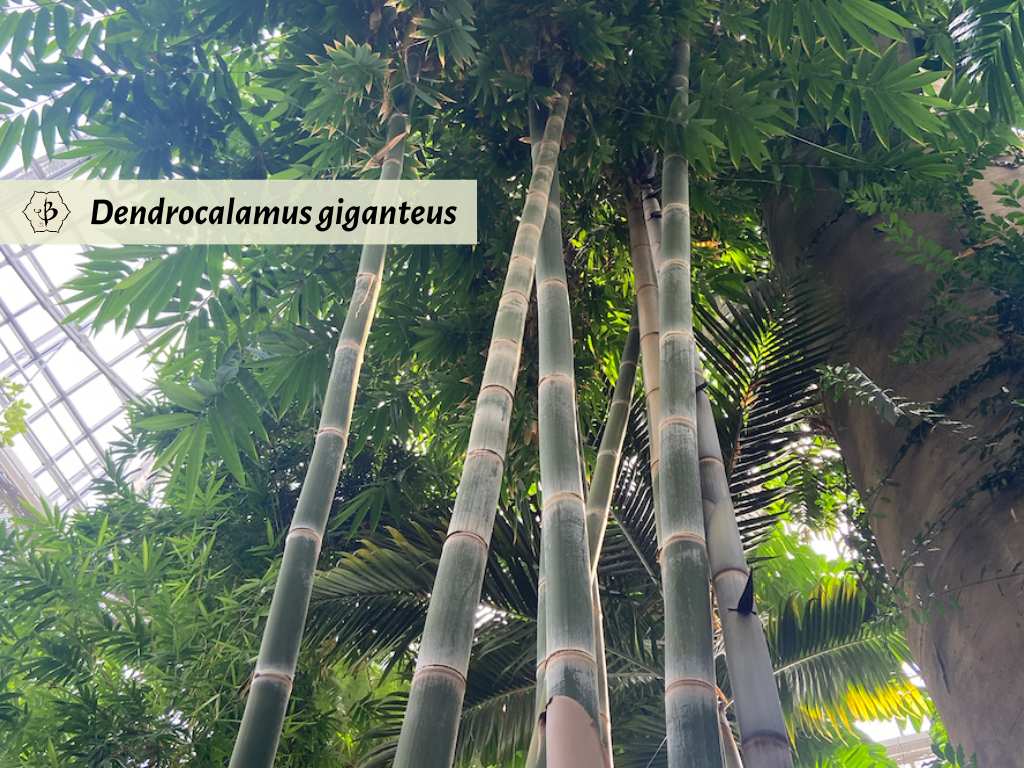
But according to Guinness, the prize for the world’s tallest bamboo goes to Dendrocalamus giganteus, also called Dragon Bamboo and Giant Bamboo, from Southeast Asia. Living up to its name, this enormous species can easily exceed 100 feet in height. But bamboo experts say that the title of Biggest Bamboo actually belongs to Dendrocalamus sinicus, more recently discovered in Laos. Members of this daunting species have been known to get more than 50 meters high, or 164 feet, with a culm diameter more than a foot wide.
That’s still a far cry from the Hyperion, a 380-foot-tall Coastal Redwood in Northern California, but pretty astonishing for a stalk of grass. Keep in mind that a maple tree, for example, will rarely grow taller than 150 feet.
Conclusions
There’s no doubt about it. The size and growth rate of certain bamboo species make them some of the most remarkable plants on earth. Growing more than a meter a day, you can actually sit and watch it grow. Grab a cold beverage (maybe with an umbrella in it), pull up a cozy rattan chair, and in 40 minutes, you can see a tropical bamboo grow about an inch.
Indeed, bamboo is widely recognized as the fastest-growing terrestrial plant. Apart from these especially vigorous varieties of timber bamboo, the next fastest-growing plant is probably giant kelp. Macrocystis pyrifera grows a little more than two feet a day, reaching a maximum length of around 150 feet over the course of a long growing season.
Just don’t expect to see bamboo growing like this in your own garden. Not that you would want to. But unless you live in Costa Rica or Indonesia, it’s probably not going to happen. Within the U.S., you might see comparable growth rates in Hawaii or Florida. But you’re still not going to set a new world record.
Frequently asked questions
What is the fastest-growing bamboo?
Generally regarded as Moso bamboo (Phyllostachys edulis), although several species can achieve similar growth rates under ideal conditions.
How much can bamboo grow in a day?
Certain species have been recorded growing more than three feet (36 inches) in a single day.
Does bamboo grow all year?
No. Most bamboo produces new shoots during a specific shooting season, usually spring in temperate climates.
How long does bamboo take to reach full height?
Most shoots reach their full height within 2-4 months.
Does bamboo keep getting taller every year?
No. Each culm reaches its maximum height during its first growing season. In subsequent it will add branches and leaves, but will not increase in height or diameter.
Further reading
To learn more about the incredible properties of bamboo, check out some of these other interesting articles.
- The many benefits of bamboo
- Bamboo anatomy and morphology: 9 Parts of the plant
- Best bamboo species for building and construction
- Bamboo and Oxygen: A breath of fresh air
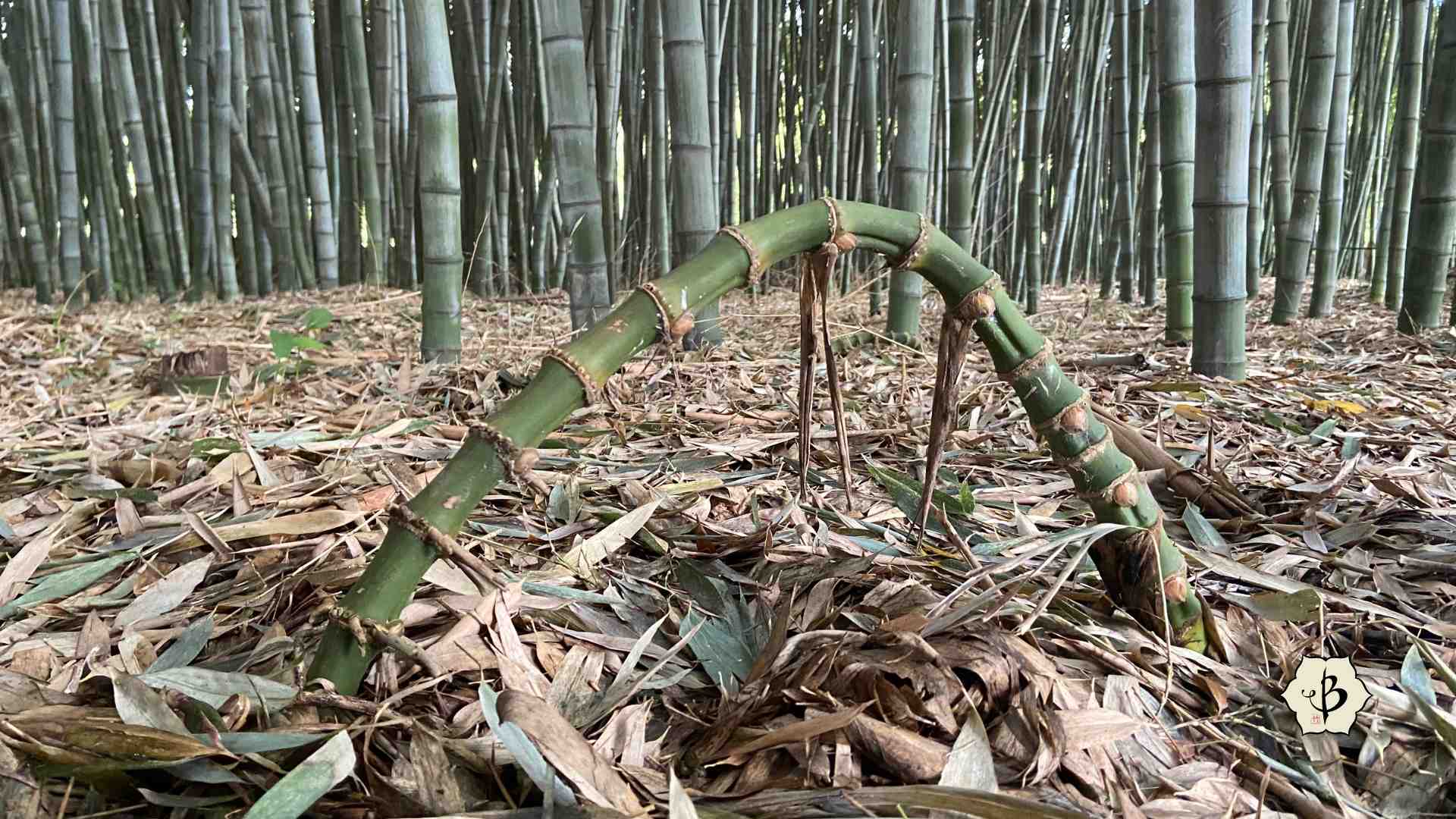
FEATURE IMAGE: Moso bamboo has one of the fastest growth rates of any woody plant. Photo by Fred Hornaday.















I’m interested in transplant bamboo especially in south Africa there are green field available
Hi. I would like to know if you have any information on Giganthochla levis bamboo species? If you have any, please let me know. I am doing my final year project on the specie so I need as much as I can on the species. Thank you for your help.
Gigantochloa is a tropical clumping bamboo, but I don’t have a lot of experience with this genus. Good luck with your research!
I live in Florida (In the States) and I was wondering if it is possiblle to purchase one of these plants and if it will survive in the hot climates of Centeral Florida? By the way this post was very useful.
Yes, various species of Dendrocalamus will do well in Florida’s heat and humidity. Check out our directory of nurseries.
Hi there. I live in lesotho, a small landlocked country in Southern Africa. We basically have 2 seasons, summer and winter. Can I grow bamboo and it grow and prosper?
Thank you.
Regards,
Peter
Yes, there are a few native bamboo species in southern Africa, and several more varieties have been introduced.
what is the best bamboo to grow in arkansas. I would like some that will get 20 to 30 ft tall and spread on its on. a fairly fast growing bamboo.
I would recommend Henon or Madake.
Hi. Will “clump” bamboo spread in a relative “straight line” or will to spread out in all directions once planted
A running bamboo type will spread in all directions, showing a preference for better soil, heading towards the water supply. Usually, a clumping bamboo will spread more evenly like a circle adding concentric rings, but the new shoots are closer together, and eventually the clump achieves a maximum size, maybe 5, 10, or 15 feet in diameter, depending on the species. You can also use rhizome barriers to control the direction of the spread.